Tea time in Tanzania was that small pause in the day, somewhere between a slight hunger pang and the big meal waiting for you at home. It simply arrived. At 11am. At 1pm. At 2pm. At 4pm. Sometimes even 6. You get my drift.
Why was tea time so important? We did not have cell phones. We certainly did not even have easy access to the house phone. The easiest and most popular way to meet friends was to say, “Let us meet for chai.” And that was it- our way to stay connected, share some gossip, vent, and laugh.
Chai poured into small glasses. Plates laden with mandazi, samosas, bhajiyas, kachori, egg chops, bateta champ, katlesi, and other fried, warm snacks, meant to be eaten with your fingers while the tea cooled just enough.
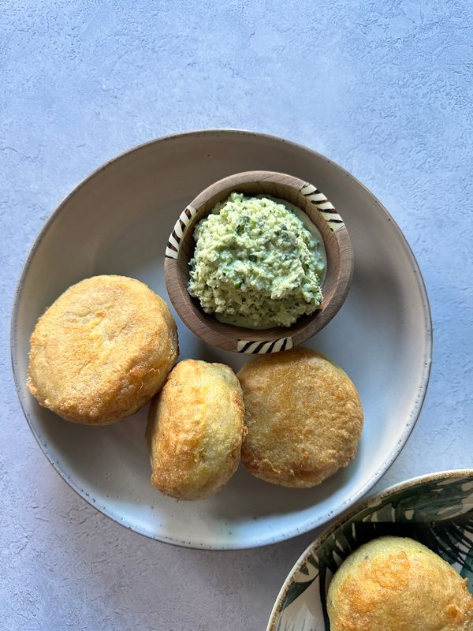
Among Ismaili and Khoja families across East Africa, this is what we call it-Bateta champ. Some said chops. Some said champs. Locally, you will see them referred to as bateta chap. The names shifted slightly from home to home, but the dish was the same. As a child, I always dreaded cutting into what I thought was a bateta champ, only to discover it was an egg chop (a whole boiled egg, covered with a mashed potato layer, dipped in an egg bath coated with breadcrumbs and deep fried- similar to a scotch egg).
To make these Bateta champ, boiled potatoes were mashed while still warm and seasoned properly with chopped cilantro, green chillies, salt, dhana jeera, garam masala, and a squeeze of lime. So good you could eat it as it was.
Then there was the kheema, cooked down until dry, spiced according to taste, and with lots of finely chopped onions and cilantro folded in. Here is a link to my Basic Kheema Filling. The filling was tucked inside the mashed potato disc, edges folded and sealed carefully, dipped in beaten eggs, rolled in semolina (before breadcrumbs came into the picture), and shallow fried until the outside crisped and the inside stayed soft. My Mum had a vegetarian version with homemade paneer and spring onions or a spicy vegetable samosa mixture tucked inside the potato instead.
These are sturdy cutlets, yet delicate enough to be broken open with the edge of a thumb. I sometimes think each cutlet is the size of the palm that shaped it. My Mum’s were tiny, maybe four bites at most, with an even layer of potato and more kheema inside. I have also had the opposite: potato-heavy, less kheema, and so large it took two people to share one.
Mine tend to be the size of a small coaster. I suspect they lean heavier on the potato side because every time I try to adjust the potato-to-meat ratio, I end up with an uneven coating and then mash it together to make a katlesi instead.
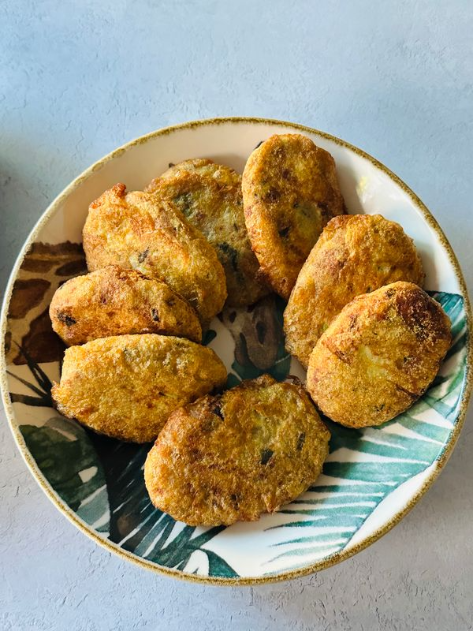
When I made them this time, they came out the way I remember. Deep golden. Crisp without being heavy. Light flecks of cilantro running through the potato. Slightly uneven edges that make them feel handmade. Not perfectly round. Gently flattened, the way they were always shaped for tea time. I had to remind myself that if you do not cook something often enough, it takes time before it looks the way it does in your memory.
Perfect cutlets or not, I still follow the same logic many kitchens do without naming it.
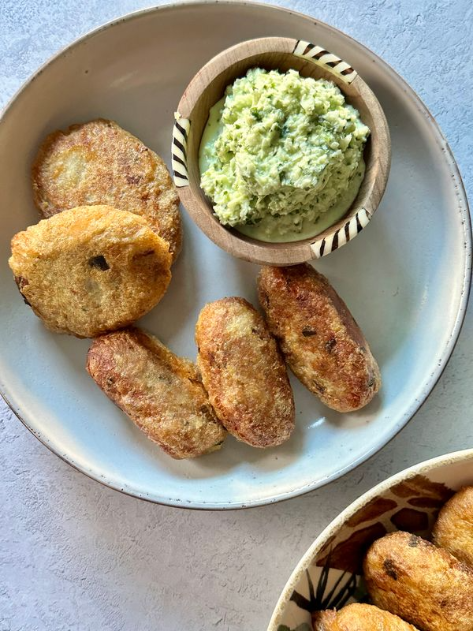
I prepare a good kheema. I prepare one well-seasoned mashed potato. From there, I shape two different appetisers. Some become bateta champ. Potato on the outside. Kheema tucked inside. Slightly flattened. Crisp shell. Soft interior.
With the remaining mixture, I fold a little mashed potato directly into the kheema, just enough to bind it, and shape small oval patties.
Same ingredients. Different forms.
When I make them now, the kitchen smells the same. Hot oil. Potatoes. Fried egg. The warm aroma of garam masala. That smoky, earthy heat that rises from the pan as the cutlets crisp.
Coconut chutney, ketchup, and a few lemon wedges are the only condiments you need to put out for the crowd that inevitably gathers around the kitchen island, hands reaching in as soon as the hot cutlets hit the plate.
And the leftovers, re-crisped in the Airfryer or toaster oven for lunch the next day, are divine.
Bateta Champ (Potato Cutlets Filled with Spiced Kheema)
Serves: 10–12 cutlets
Ingredients
- 2 lbs (4 cups) lean ground chicken, lamb, or beef
- 1 tablespoon vegetable oil (optional)
- ¼ cup water
- 1½ teaspoons garlic paste
- 1 teaspoon ginger paste
- 1 teaspoon Thai green paste, or more
- ½ teaspoon turmeric
- 1½ teaspoons ground cumin and coriander powder (dhana jeera)
- ½ teaspoon dry red chilli powder (optional)
- 2 cups finely chopped yellow or Spanish onions
- 1 cup finely chopped green onion (cut lengthwise first)
- 1 teaspoon garam masala
- 2 teaspoons salt, or to taste
- 3 tablespoons lemon juice
- 1 cup finely chopped cilantro- I use lots of cilantro!
- 3 green onions, finely sliced (optional but recommended)
- 2 finely chopped jalapeño or Thai chillies (optional)
- 8 fresh mint leaves, finely chopped (optional)
For the Potato Layer
- 6–8 medium Russet potatoes, boiled and mashed while still warm
- 2 tablespoons chopped cilantro
- 1–2 finely chopped green chillies
- Salt to taste
- ½ teaspoon dhana jeera
- ¼ teaspoon garam masala
- Squeeze of lime
For Coating
- 2 eggs, beaten
- Semolina for rolling (or breadcrumbs)
Method
- Cook the kheema filling first. Heat the oil in a pan over medium heat and add the onions. Cook until softened.
- Add the garlic paste, ginger paste, and Thai green paste. Stir and cook briefly until fragrant.
- Add the turmeric, dhana jeera, red chilli powder if using, and salt. Mix well.
- Add the ground meat and cook until browned. Continue cooking until the mixture becomes dry.
- Stir in the lemon juice, cilantro, green onions, chillies, and mint if using. Cook until the kheema is completely dry. Remove from the heat and allow it to cool.
- Mash the boiled potatoes while still warm.
- Add cilantro, green chillies, salt, dhana jeera, garam masala, and a squeeze of lime. Mix well and taste. The potato mixture should be well seasoned on its own.
- Take a small portion of mashed potato and flatten it in your palm. Place a spoonful of kheema in the center and gently seal the potato around it.
- Shape into a slightly flattened oval.
- Dip each cutlet in beaten egg and roll in semolina.
- Heat a pan over medium heat and add enough oil to coat the bottom of the pan for a shallow fry.
- Fry the cutlets until deep golden and crisp, turning gently so both sides cook evenly. Do not overcrowd the pan.
- Remove and drain on paper towels.
Watch me make it here:
Vegetarian Option
- Replace the kheema filling with grated paneer mixed with salt, pepper, and a squeeze of lemon juice.
- You can also use a classic mixed vegetable samosa filling with potatoes, peas, green chilli, and dhana jeera.
Shape and fry the same way.
To Serve
Serve hot with coconut chutney and ketchup alongside a glass of chai.
Notes from my Kitchen:
Best potatoes to use: Russet potatoes work best for these cutlets because their high starch content makes the potato mixture light and easy to shape. Yukon Gold potatoes also work well, but they are slightly creamier.
Make sure the kheema is dry: The filling should be cooked until there is no excess moisture. Wet kheema will make the cutlets difficult to seal, and they may break while frying.
Season the potatoes well: The mashed potato layer should taste good on its own before shaping. This ensures the cutlets are flavorful all the way through.
Semolina vs breadcrumbs: Traditionally, these were rolled in semolina. Breadcrumbs became common later and can also be used. Semolina gives a slightly crispier shell.
Chill before frying (optional but helpful): If the cutlets feel soft while shaping, place them in the refrigerator for 20 to 30 minutes before frying. This helps them hold their shape and prevents them from breaking in the oil.
Make ahead: The cutlets can be shaped ahead of time and refrigerated for several hours before frying.
Freezing: Fully fry the cutlets and allow them to cool completely. Freeze in a single layer on a tray, then transfer to a freezer bag once frozen.
To reheat in the oven or toaster oven, place on a baking sheet and warm at 375°F (190°C) for 10–15 minutes, or until heated through and crisp again.
To reheat in the air fryer, cook at 350°F (175°C) for 5–7 minutes, turning once halfway through, until hot and crisp. This is my preferred way to reheat them. The outside crisps up beautifully while the inside stays soft and flavorful.

 Nadia's Meza recipes
Leave a comment