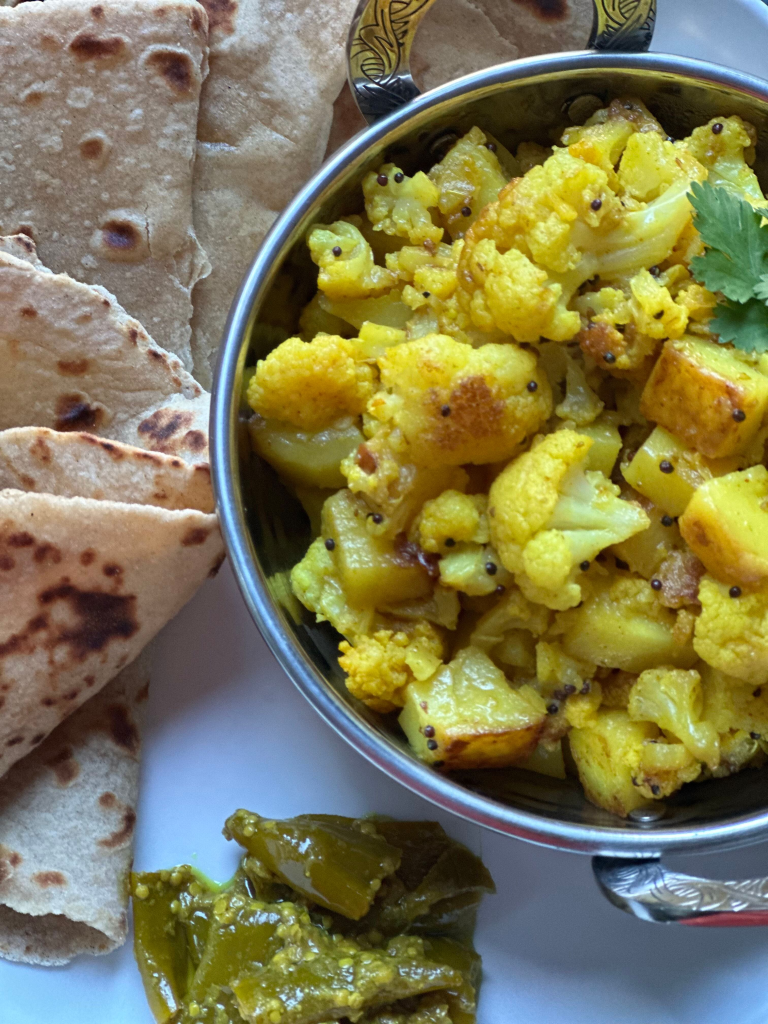

“Cauliflower,” wrote Mark Twain, ”is nothing but cabbage with a college education.”
In the end of the fifteenth century, cauliflower was introduced to Europe from the northeastern Mediterranean region, in the American colonies by the 1600s and then introduced to India by the British in 1822.
Cauliflower is indeed a cultivated member of the cabbage family and if evolution is an education, cauliflower, a member of the mustard family, first grew wild, then differentiated as it was cultivated, or educated. Inexpensive, plentiful, and available the year round, it finds its way into a Gujarati kitchen at least once a week, in the form of Phool Kobi vantana nu shaak, Aloo Gobi, Pav bhaji, Gobi Pilau, Gobi paratha, or recently as cauliflower rice/ pizza base or roasted and slathered in spicy labneh and stuffed in a pita.
As a 11-year-old tasked by grannies to help separate the florets, I was constantly reminded at family meals how I would bring the house down with my screams when the green or white residents would crawl out as I pulled off the leaves.
Here is a simple Phool Kobi ne Bataka nu Shaak recipe they did teach me though after their ears stopped ringing.
Ingredients:
- 1 medium cauliflower, washed and cut into small florets approx. 5 cups
- 2 medium red potatoes peeled and cut into equal sized cubes approx. ½ inch cubes.
- 1.5 tbsps. olive oil
- ¼ tsp/ pinch asafetida (omit if GF)
- 1/2 tsp. mustard seeds
- 1 tsp. turmeric powder
- 1/2 – 1 tsp. red chili powder/Kashmiri lal mirch
- 1 tsp. Coriander & Cumin/ dhana jeeru powder (Optional)
- 1.5 tsp. salt or to taste
- Chopped cilantro for garnish.
- 2 tbsp. water
Method:
- Heat oil in a wok or a heavy bottom pan and add asafetida and mustard seeds.
- As soon as the mustard seeds crackle add potato cubes.
- Add the ½ of the dry spices (turmeric, coriander and cumin powders, red chili powder and salt)
- Keep the flame on medium-low, stir the potatoes so that they are evenly coated with the spices.
- Add about 2 tbsp of water, add the cauliflower on top and sprinkle the remaining half of the dry spices.
- Cover the pan with a lid to cook the potatoes and cauliflower on low flame.
- The steam from the water will cook the potatoes all the way through.
- After 6 minutes or so, remove the lid and let any moisture evaporate – do not stir at this point otherwise the steamed vegetables will turn to mush.
- When there is no moisture left, gently stir the potatoes and cauliflower, add a drizzle of oil if needed and let them cook to as crispy and dry as you like but be careful not to burn them.
Take the pan off the heat, garnish the shaak with cilantro.
Serve with spicy Kadhi and phulka rotli or any lentil curry.
Leftover Makeovers:
- Defrost the Kawan frozen parathas by laying them on a work surface so it softens a little bit.
- Cut the parathas in two halves, and fill it with any filling, and don’t over fill, press the edges and crimp.
- Bake at 350° degrees for 20-30 min till brown on both sides, or pop them into the air-fryer for 5-6 mins at 300°.


 Nadia's Meza recipes
Leave a comment