Vegan-adaptable

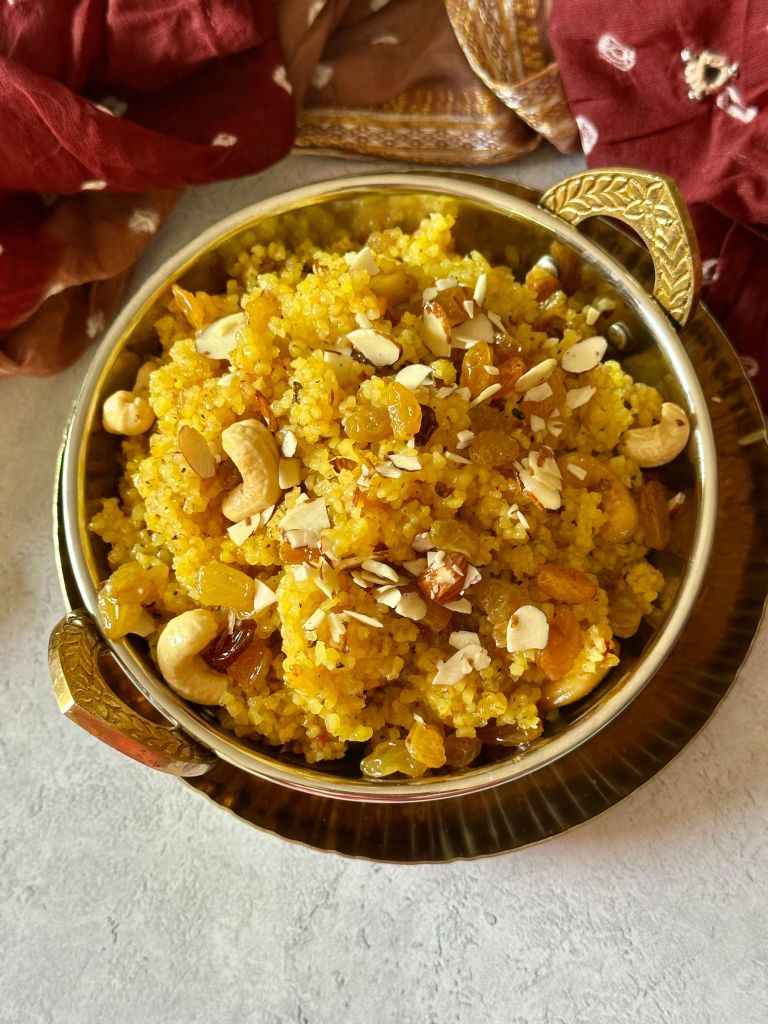
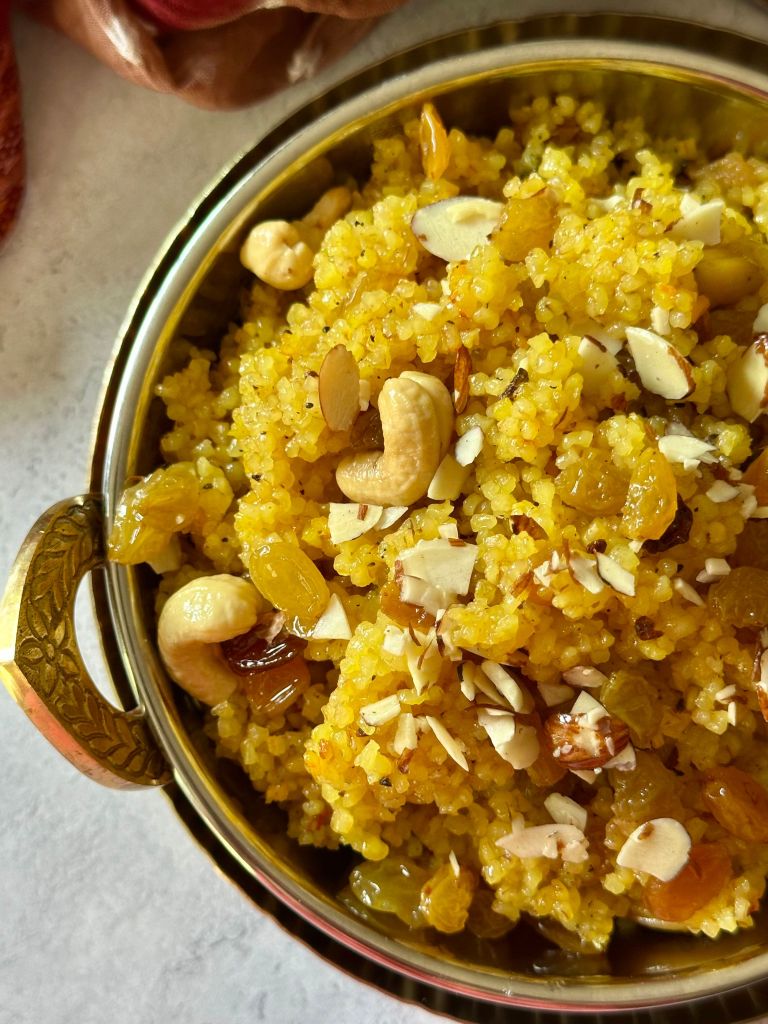
What do you call this humble cracked wheat dessert in your home? In my Chaa Gaam or Charotar Patel community, we call it Lapshi (if your Baa was missing a few front teeth!) or Lapsi or Fada ni Lapsi. In other parts of Gujarat in different communities, you will often hear it referred to as Kaunsar/Kansar. Names change from region to region and family to family, Lapsi, Kansar, Ormu-but the heart of the recipe stays the same. Delicious meets doable, especially as the weekends pick up steam, this version comes together in under 10 minutes, with just 6 minutes of cooking time in the Instant Pot.
Most people know broken wheat (dalia, or ghaun na fada) from savoury dishes like khichdi or upma. But in our home, it was usually used to make Lapsi, a sweet made by roasting the broken wheat or fada in ghee, cooking until golden and fragrant, and flavored with sugar, cardamom, nutmeg, and a few strands of saffron, then covered and simmered gently until the wheat was tender. The result is hearty yet comforting, and perfect accompaniment to a meal of dhar-bhaat-shaak. To me, Lapsi is one of those everyday heritage recipes that reminds me of old-time hospitality.
In a typical Patel kitchen, Kansar is usually made with fine semolina or wheat flour mixed with sugar or gour, steamed and then served warm. The steamed kansar which resembles breadcrumbs would be placed on the table along with bowls of melted ghee and powdered sugar. Each person would help themselves, pouring as much ghee as they liked and sweetening it to their taste. Then, using their fingers, they would crumble and mix the Kansar with the sugar and ghee until it came together into a soft mixture. This is a post for another day, and another heritage recipe I cannot wait to share with you soon-it was my granny’s favorite dessert.
Lapsi and Kansar are referred to as desserts, but they were usually what we call mistaan, served as part of a thali, eaten alongside vegetable curry, dal, and rotli. They tied the whole meal together-spicy, salty, sour, and sweet from Lapsi or Kansar, the four essentials of our everyday meals.
A thali always had one or two sweets, especially if guests were expected. And in those days, guests came almost every day. It was always tradition to serve comforting dhar-bhaat, food that spoke of warm hospitality and maybe that is why sometimes the simplest spreads are the ones that linger longest in memory.
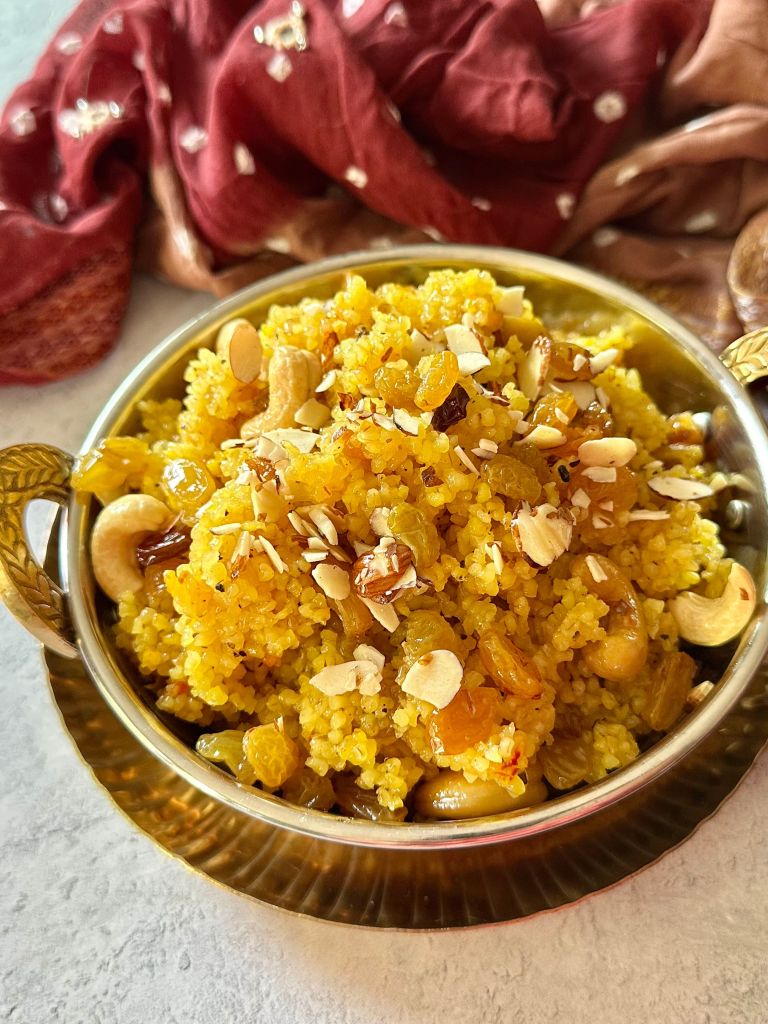
For me, Lapsi or Kansar are more than just sweets. They are bonds, recipes passed from my Baa and Mum, memories of my granny’s table, and reminders that food is one of the ways love travels across generations.
Our usual spread was simple yet layered. Thinking of it now, in these busy times, you might feel overwhelmed by how many dishes there were. But each one had its place: a bowl of sweet and spicy Gujarati dhar, plain rice with a dollop of ghee, crispy papads, a seasonal shaak, often whatever was in season, like valor, undhiyu, or bharla ringda batata nu shaak, puffy mori puri, something cool to wash it all down, like salty chaas, and homemade pickles and a mistaan to balance out the spice. This lunch menu is a gentle sigh of a meal.
In the Gujarati thali, sweets or mistaan are not an afterthought. Mishtaan like Shrikhand, Doodh Pak, Shiro, Mithi Boodhi, Boondhi na ladwa, Churma na Ladawa, Kansar or Lapsi are served right alongside the puri, rotli, shaak, and dal or lentil curry. They are part of the meal itself, balancing flavors, rather than something saved for later.
Now, with Navratri, Dhanteras, and Diwali around the corner, I thought of sharing this heritage recipe. Once an everyday comfort, it also doubles as a festive sweet, easy, quick, satisfying, and always a star at celebratory tables.
I have seen Lapsi made with milk or even evaporated milk, but I am sharing the recipe just as I learnt it from my Baa and Mum for a dan-e-dar (where the grains remain separate and distinct after cooking, which is a desirable quality!) Lapsi. The only change I have made is in the method-this version comes together in under 10 minutes, with just 6 minutes of cooking time in the Instant Pot. And if you don’t have an Instant Pot, a regular pressure cooker works just as well.
For those of us who were blessed with a grandparent’s table, or now find ourselves stepping into that role, these heritage recipes are more than a sweet. It is a reminder of the bonds that anchor families across generations.
So, if I have got you drooling for some Gujarati dhar, ghee waro bhaat, puri, shaak, papad, and a bowl of warm lapsi, why not try it at home?
Watch me make it here:
Instant Pot Fada ni Lapsi
Ingredients
- 1 cup broken wheat (dalia / fada)
- 3 tablespoons ghee
- ½ cup white sugar (add more if you like it sweeter)
- 1¼ cups water (a little more if needed)
- ¼ teaspoon cardamom powder
- A small pinch of nutmeg, freshly grated
- A few strands of saffron pistils, soaked in 1 tablespoon water
- 3 tablespoons of golden raisins (Use more if you like)
- 2 tablespoons whole cashews (Use more if you like)
- 2 tablespoons sliced almonds, lightly toasted
Method
- Set the Instant Pot to Sauté mode. Heat ghee and add cashews and raisins. Toast until golden, then remove and set aside.
- In the same ghee, add the broken wheat and roast until golden and aromatic.
- Add water, sugar, cardamom, nutmeg, saffron milk, and half of the toasted cashews and raisins. Stir well to combine, then cancel Sauté.
- Close the lid and cook on High Pressure for 6 minutes. Allow a 10-minute natural release, then carefully open the lid.
- Garnish with the reserved cashews, raisins, and sliced almonds. Stir once gently and serve warm.
Notes from my Kitchen:
Sweetness: Start with ½ cup sugar and adjust to taste. For a lighter version, use a little less.
Texture: If you like Lapsi softer and more porridge-like, add an extra splash of water or milk. For a drier, dan-e-dar halwa-style Lapsi, stick to the original measurement.
Nuts & Raisins: Toast cashews and raisins in ghee
Saffron: Soak strands in warm water before adding to release their color and aroma.
Garnish: A garnish of edible silver leaf (varak) makes this feel extra special for Diwali.
Make Ahead: Lapsi reheats beautifully. Just add a spoonful of hot water when warming to loosen it.
Vegan Version: Replace ghee with coconut oil or a neutral plant-based oil. The flavor will be slightly different but just as delicious.
If you cook this recipe, share a photo and tag me @spicymemsahib, let’s keep these heritage recipes alive together.

 Nadia's Meza recipes
Leave a comment