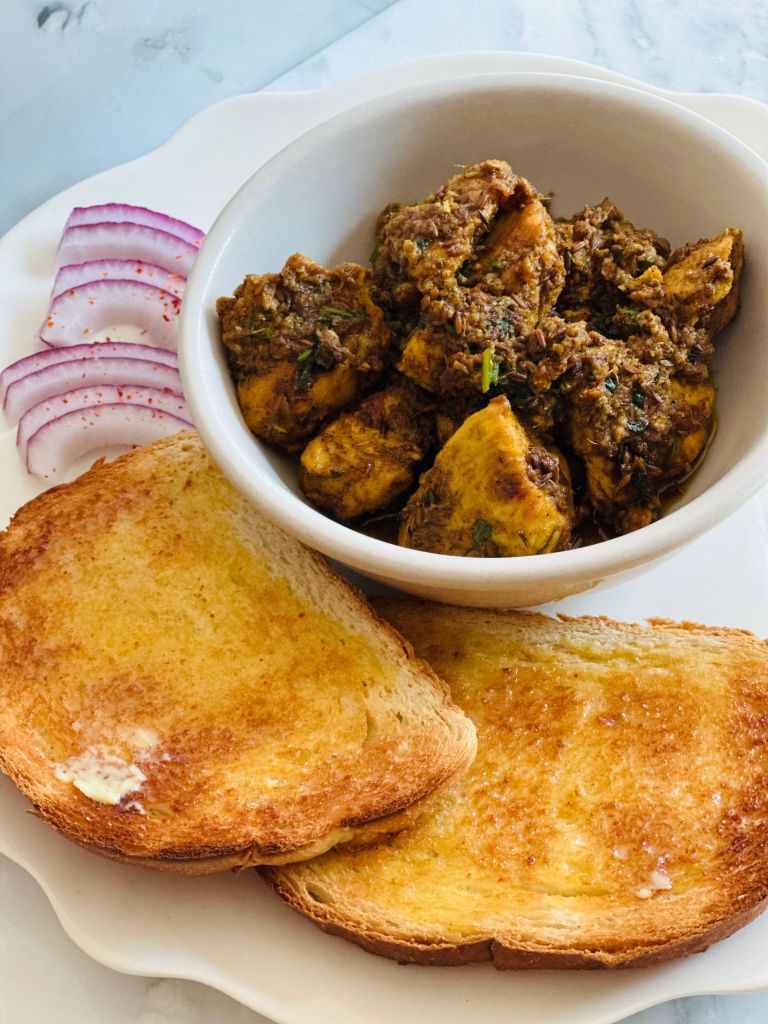

There are some recipes you carry in your bones before you ever learn to cook them. Jeera Chicken is one of mine. I can eat this with a spoon and need little else to accompany. My kids love hearing stories of a time and place they have never known, yet feel deeply connected to. Maybe it’s the smoky scent of cumin, or the way we eat with our hands and stories we share, but somehow, they too are transported to the East African days of my childhood.
Weekends smelled different growing up, especially if my dad and his friends gathered at our place. There was a flurry of activity at the crack of dawn, Mum made sure the Hondwo was in the oven and cooked early for her, because the rest of the morning would be spent on appetizers and the main meal for the men. These men’s koroga parties took place at a different house every weekend, and that meant the kids went with their dads and hung out with their friends’ kids.
This was not a dish we ate every day. Koroga of any sort is a weekend dish. It is the kind of meal that blooms in the slowness of the weekend.

My Mum learnt to cook her first chicken curry or Kukda/kukudu from my Dad’s friend Jamnadas Uncle (Jamnadas Topiwala). He was not related to us, but he was family in every way that mattered.
At every koroga party, he would get set up near the coal jiko or sigri, shirt sleeves rolled up, a glass of Johnnie Walker in one hand, papad or peanuts in the other. Bottles of Tusker, the iconic pale lager, were brought out on demand, the bottles slick with condensation. “Baridi, baridi!” the men would say, calling for them cold. The group of 8 or so men would gather at the karata table, dealing cards in rounds, their voices low and steady. There would be a low chuckle, the exhale of cigar smoke curling into the air, ice knocking gently in glasses, and the soft slap of cards on the table. While the cards were being dealt and cigars lit, he kept one eye on the game, the other on the sufuria.
He would shuffle his cards, deal a hand, sip, snack, then walk over to check the pot. Stir. Add something. Stir again. His twinkling green eyes would flick toward the bubbling curry, and every now and then toward us kids, who he kept supplying peanuts to.
And it was always cooked with generous blocks of KCC butter, the bright yellow 500 gms slab melting into everything, coating the chicken and spices in the kind of richness that only East African kitchens know. The chicken would simmer for what felt like hours, until it practically fell apart. By then, a quiet crowd of us kids would start gathering around, just close enough to be noticed.
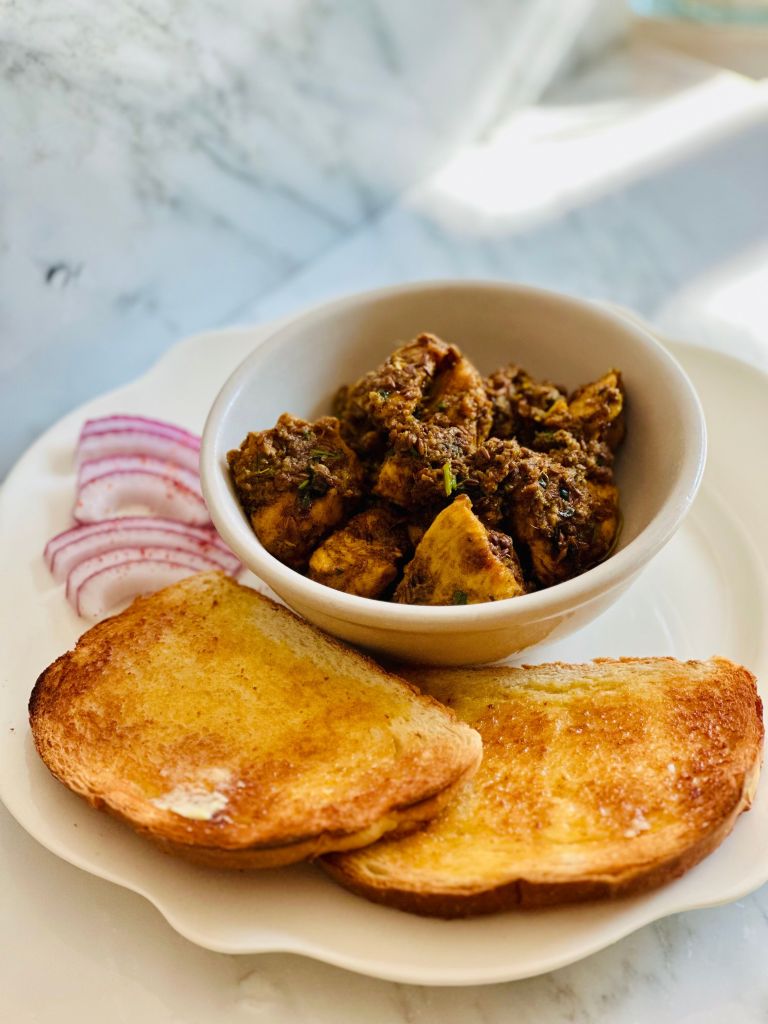
He would eventually call us over and hand out the best bits first, usually a leg each and some toasted bread to mop up the sauce. And that is still how I eat it, all these years later. Some things don’t need to change.
But the part that stays with me most is not the chicken. It’s my Mum. A lifelong vegetarian who somehow cooked meat better than anyone I knew. She made a handful of meat dishes, uniformed-sized meatballs, lamb samosa, batata champ, several types of oven-baked chickens, lamb chops, mattar kheema, a proper lamb and chicken biryani, finger-licking kuku paka, mayai waru tarelu kukdu, to name a few, but they were always unforgettable.
As a vegetarian, her kitchen was equipped with separate pots, pans and utensils for meat, once she figured out how to cook chicken and lamb, she was off to the races. She often told me, she just knew what spices to reach for, how to balance heat and acidity, how to build depth. She could just see a meat dish, and somehow know how to make it her own. She is no longer here, but when I cook this dish, it is as if she’s standing beside me again, quietly guiding, measuring nothing, just knowing, watching me now, the way I once watched her.
And this Jeera Chicken has her own quiet signature. Marinated with yoghurt, cooked in half oil half butter, a handful of toasted cumin thrown in at the end, a dry roasted version and always cumin-heavy. She didn’t taste it. She didn’t need to. She just knew.
If you ask me this is not just a recipe. It’s a thread between two people, between someone who passed it down and someone who never tasted it but perfected it anyway. Between coal fires jikos in East Africa and the kitchen I now cook in. Between who we were, and who we still are.
So here it is, Mum’s version. It’s wildly flavorful yet simple, heavy on the cumin and unapologetically old school.
And if you don’t mind spending a little time in the kitchen, surrounded by the scent of butter, cumin, and spice, this stunning dish makes every minute worth it.
Why not give it a go this Saturday night? Trust me, your kitchen will smell incredible, and someone will definitely ask for seconds.
Watch me make this cumin-rich, East African-style Jeera Chicken step by step-right here
Jeera Chicken
Ingredients:
- 1½ lb chicken (Breast, bone-in, or boneless thigh pieces)
- 3 tablespoon plain yogurt
- 2 tablespoon ginger-garlic – green chilli paste (halved)
- ¼ to ½ cup whole cumin seeds (yes!this is the heart of the dish!) +
- 1 tablespoon whole cumin seeds
- 3 tablespoon butter
- 3 tablespoons olive oil
- 1 medium onion, finely chopped
- 1 large tomato, grated
- 2 green chilies, slit
- 1 teaspoon cumin powder
- 1 teaspoon coriander powder
- ½ teaspoon turmeric powder
- 1 tsp red chili powder (adjust to taste)
- 1 tablespoon black pepper, ground
- 1/2 cup water
- Salt to taste
- 1 teaspoon garam masala
- Fresh cilantro, chopped (for garnish)
- Juice of half a lemon
Instructions:
- In a bowl, combine chicken with half of the ginger garlic, green chilli paste, salt, and yogurt. Mix well and let it marinate for at least 30 minutes (or overnight in the fridge).
- In a dry pan, toast ¼ cumin seeds on medium heat until fragrant and slightly darkened (2–3 minutes). Remove and coarsely crush half of them. Set aside.
- In a heavy-bottomed pan, and oil and then the butter.
- Add 1 tablespoon of cumin seeds and let them bloom.
- Add the chopped onions and sauté untill a light pink, and then add remaining ginger, garlic green chili paste. cook until the raw smell disappears.
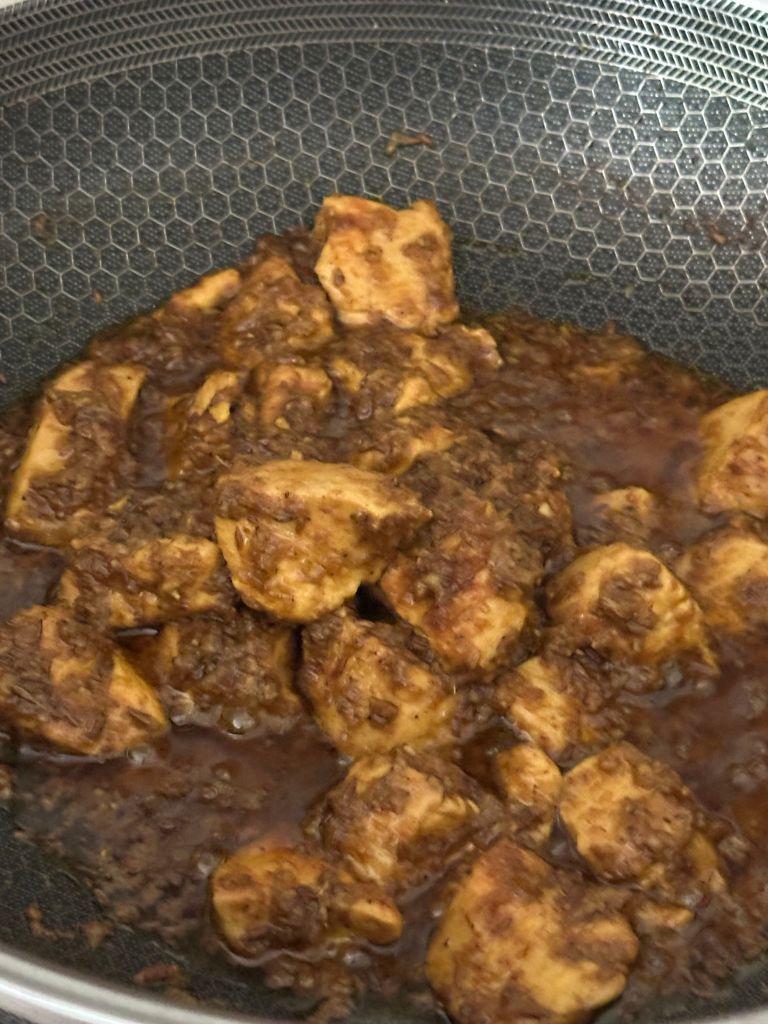
- Add chicken and black pepper and salt, and slit chilies. Sear on high heat until the chicken is lightly browned and coated with the masala.
- Add all the ground spices-cumin and coriander powders, turmeric, red chili and cook for a minute to bloom them.
- add tomatoes and cook until softened and the oil separates.
- Cover and cook on medium-low heat for 20–25 minutes or until the chicken is fully cooked and tender. Stir occasionally and add a splash of water if needed.
- Uncover, stir in the crushed toasted cumin seeds and garam masala. Cook for another 2–3 minutes.
- Finish with a squeeze of lemon juice, and chopped fresh cilantro.
Serve hot with chapatis, parathas, or plain bread.
Notes from my kitchen
Toast the cumin, do not skip this step. Dry-roasting the seeds until fragrant and lightly darkened adds a smoky depth that truly defines this dish.
Use good-quality salted butter. If you can, reach for the rich, nostalgic kind we grew up with-this is what gives the dish it’s unmistakable East African warmth.
Do not rush the onions. Let them soften and turn lightly golden. They form the base of flavour, and that slow caramelisation is worth every minute.
This is a dry-style curry. The masala should cling to the chicken, not float. Let the moisture reduce slowly so the flavour intensifies.
Taste, but trust your instinct. My mum never tasted the meat, yet somehow always got it right. Smell, colour, and memory can guide you just as much as seasoning.
If this story stirred a memory for you or reminded you of someone you have cooked with or cooked for, I would love to hear it.
Try my Mum’s Jeera Chicken, and share what it brings up for you. Leave a comment, pass the recipe along, or simply tuck it into your own weekend traditions. I would be honoured to know it found a place in your kitchen.

 Nadia's Meza recipes
Leave a comment