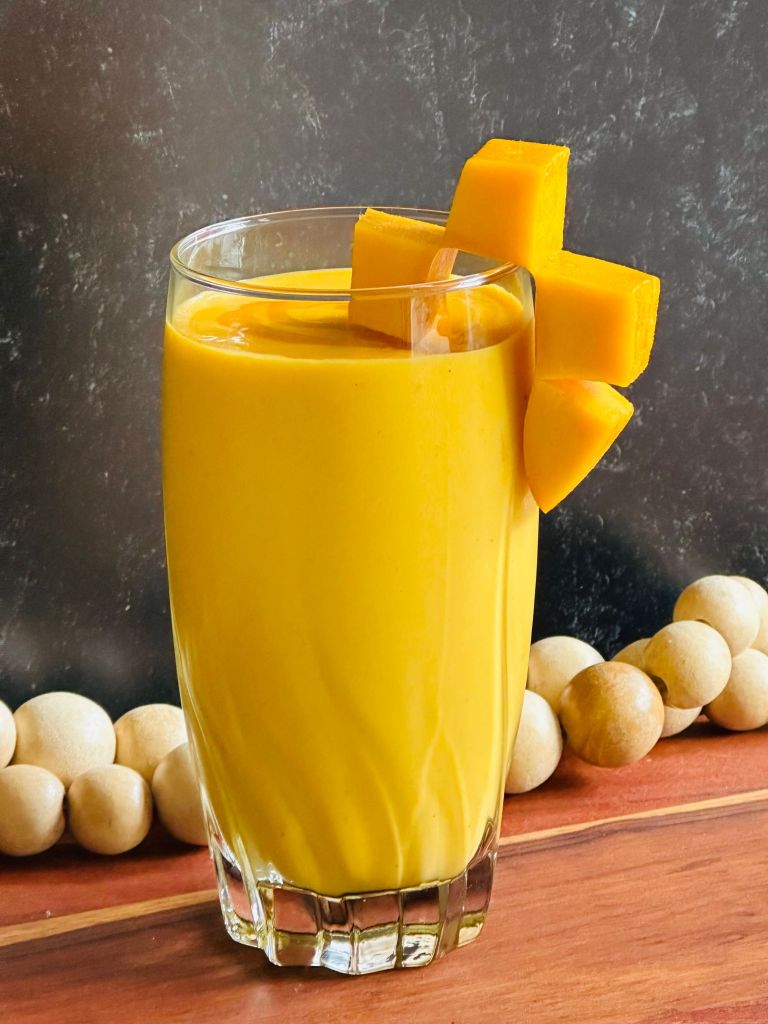
Our love for mangoes is boundless and unrivaled. Did you know there are upwards of 1,000, and perhaps closer to 1,500–2,000, distinct mango varieties globally? Yes, you read that right. My grannies used to ripen mangoes in gunny sacks nestled inside wooden crates. Within days, the earthy scent of jute would mingle with the sweet perfume of ripening mangoes, filling the air with the promise of endless keri no rus.
In our house, mango season was a season of rituals. There were mori puris with sweet ras, sprinkled with ginger powder (soonṭh); sun-cured slices of raw mangos, rubbed with salt and turmeric, laid out on the terrace. Later, they would be tossed in warm oil and fiery pickle masala. That sharp, tangy scent would hit your nose before you even stepped into the kitchen, clinging to everything, grannies and mum’s fingers tinged red-orange from the spices.
Icy cold and tangy aam panna was always chilling in the fridge, and the cooling baflo, also known as kachi keri nu panu or mango sherbet, made its way to the table at nearly every meal. I looked forward to my personal favorites- kachi keri no chundo for lunch, and sticky-sweet and spicy chundo with thicki puris for dinner. And then there were the two curries I ran a mile from-Gujarati Fajeto, a spiced yogurt and mango pulp curry, and paaki keri na gotla nu shaak, a curry made from the peels and stone after extracting the aam ras. Every part-the pulp, peel, and even the stone, got used. Nothing went to waste.
Mango lassi, though? That was different. My mum made it as a kitty party treat-something a little exotic for the ladies attending the tea parties. It was the only time we ever got to have it besides the annual trips to India.
It was only after my own kids started asking for mango lassi at restaurants that I started making it at home. And now it has become our own summertime staple, the one drink that never lasts long in the fridge. My kids love it so much, we end up making a fresh batch every three days. It’s creamy, nostalgic, and honestly? Restaurant-quality, but made right at home.
Most Indian restaurants around the world use canned mango pulp instead of fresh mangoes. Why? because canned pulp gives consistent taste and texture. It is reliable, repeatable, and delicious. You can find canned Kesar or Alphonso mango pulp at your local Indian grocery store, or even on Amazon. I especially love Swad’s Alphonso or Kesar pulp, although it does have added sugar.
Now, if you’re lucky enough to score fresh mangoes during the season, especially Indian or Pakistani ones like Alphonso, Anwar Ratol, or Chaunsa, grab them. They are eye-wateringly pricey (think $39.00 for a box of 12!), but absolutely worth it. You will find them at your neighborhood South Asian store.
More often than not, you will come across Mexican varieties like Champagne (also called Ataulfo or Honey mangoes) or red mangoes. If you’re not using Indian mangoes, I highly recommend blending fresh mango chunks with some mango pulp for that deep, unmistakable flavor.
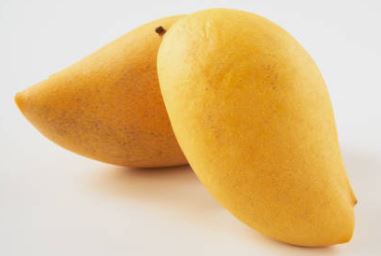
Ataulfo or Honey mango
I swear by the mighty Alphonso (fresh or plup). It’s got that rich, floral, honey-sweet flavor that no other mango comes close to. Skip any fibrous mangoes like Tommy Atkins, Haden, or Keitt (In the US). They are not sweet enough, and the texture throws the whole thing off. Stick to honey-sweet, buttery mangoes, to create the creamiest lassi without a fight.
Then there’s the yogurt. The lassi game depends on it. Use full-fat, thick yogurt, plain and unsweetened. Greek yogurt is great too. What you do not want is runny, watery, overly sour yogurt. Fresh yogurt that is just set, with the slightest tang, is your best friend here.
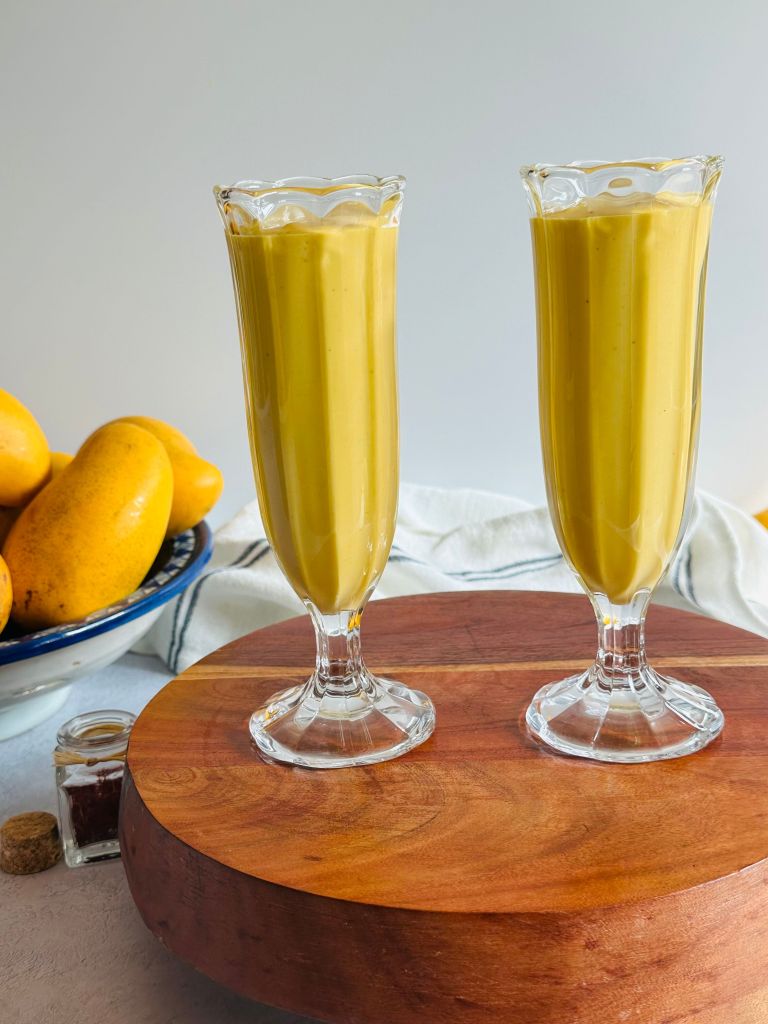
Now, do you need to add half-and-half or whipping cream? No. But do I? Absolutely. And here is why. If you have ever had lassi in the narrow, sun-drenched lanes of Old Delhi in the dead of summer, you know they don’t mess around. They use full-fat cow’s milk to make yogurt so thick it forms a glorious layer of malai (milk cream) on top. That’s the richness I’m chasing. A splash of cream takes this from a watered down mango lassi to a mango smoothie kind of indulgent, velvety summer treat.
A pinch of cardamom? Non-negotiable, and such a vibe. Add a few strands of saffron, and now you have got something a little bit regal, both of these adding that floral, almost nostalgic warmth that makes the lassi feel even more special.
If you’re adapting this recipe outside of the US:
Use ½ cup double cream + 1 cup whole milk in place of both U.S. whipping cream and half-and-half. Or just use single cream (18% fat) for the entire dairy portion if you’re going for a lighter version.
Want to see this mango lassi come to life?
Head over to my YouTube channel to watch the full video:
Ingredients
- 1.5 cups mango pulp (preferably Alphonso or Kesar)
- 1 cup fresh ripe mango chunks (Champagne or Indian varieties)
- 1 cup Greek yogurt (or full-fat plain yogurt)
- ½ cup whipping cream
- 1 cup half-and-half
- 1 cup ice cubes
- 2–3 tablespoons sugar (adjust to taste)
- ¼ tsp ground cardamom
- few saffron strands
- Milk to adjust consistency
To Adjust Consistency:
- If too thick, add 4 tablespoons of cold milk or water, until pourable but still creamy.
Instructions
- Add the whipping cream, half-and-half, and yogurt to a high-speed blender and blitz for a few seconds until smooth and slightly aerated.
- Then add the mango pulp, fresh mango chunks, ice, and sugar.
- Blend until smooth, creamy, and frothy.
- Taste and adjust:
- Sweetness → add more sugar if needed
- Thickness → thin with cold milk or water, 1 tbsp. at a time.
- Pour into chilled glasses and serve immediately, or store, covered, in the fridge for up to 24 hours
Dairy and Vegan Substitutes for Whipping Cream & Half-and-Half (Non-U.S. Readers)
Vegan Swaps:
- Yogurt → Use unsweetened coconut yogurt, cashew yogurt, or oat yogurt. Coconut yogurt gives the creamiest texture and slight tropical notes that pair beautifully with mango.
- Whipping cream → Use full-fat coconut cream (the thick part from a chilled can of coconut milk) or plant-based double cream.
- In the UK, look for brands like Oatly Creamy Oat, Alpro Soya Single Cream, or Elmlea Plant-Based Double Cream.
- Half-and-half (common in the U.S., it’s half milk, half cream) → Replace with your favorite barista-style oat milk, soy milk, or almond milk.
- In the UK and worldwide: Oatly Barista, Alpro Barista, or any unsweetened plant milk with body and richness.
What’s “Whipping Cream” and “Half-and-Half”?
If you are outside the U.S., you can replicate the creamy richness of American dairy products. In the U.S., whipping cream has a fat content of around 30–36%, and half-and-half is roughly 10–12%, made from equal parts whole milk and light cream.
- Whipping Cream Substitute (30–36% fat)
Use UK whipping cream (~35%) directly.
If you’re using double cream (47–48%), it’s richer—so either use a bit less, or dilute it slightly with whole milk (e.g., 3 tbsp double cream + 1 tbsp milk). - Half-and-Half Substitute (10–12% fat)
Mix equal parts whole milk and single cream (18% fat).
No single cream? You can also dilute double cream with milk in a 1:3 ratio (1 part cream to 3 parts milk) to mimic the lighter consistency. - These swaps will help you get that same creamy, pourable texture without overpowering the mango flavor.
Notes from my kitchen:
Too thick? Too sweet?
Thin with a splash of cold milk or water. Adjust sugar or honey to taste-it depends on how ripe your mangoes are.
Pulp + Chunks = Depth
I love using both mango pulp and fresh mango chunks. pulp gives that restaurant-style consistency, and the fresh fruit adds body and brightness.
Blitz the cream first
I start by blending the cream, half-and-half, and yogurt for a few seconds. It gives the lassi a light, frothy base before the mango goes in.
Don’t skip the cardamom
Just a pinch adds that floral warmth that makes the lassi feel like a treat, not just a drink.
Have you grown up with mango lassi too?
Whether it’s a taste from your childhood or something you have only ever ordered at a restaurant, I would love for you to try this homemade version. Creamy, floral, and bursting with mango flavor.
Give it a go and let me know how it turns out! Leave a comment or tag me @spicymemsahib, I would love to see your version.

 Nadia's Meza recipes
Leave a comment