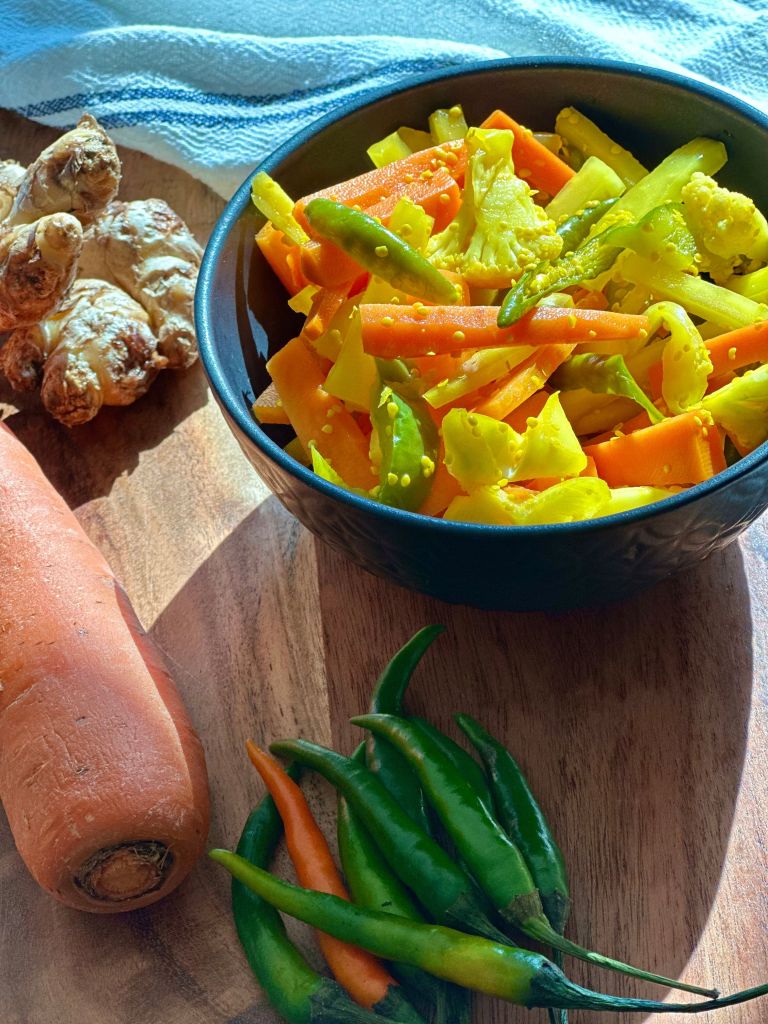
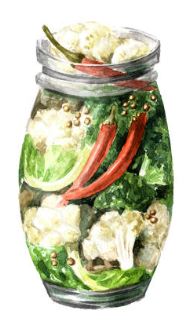
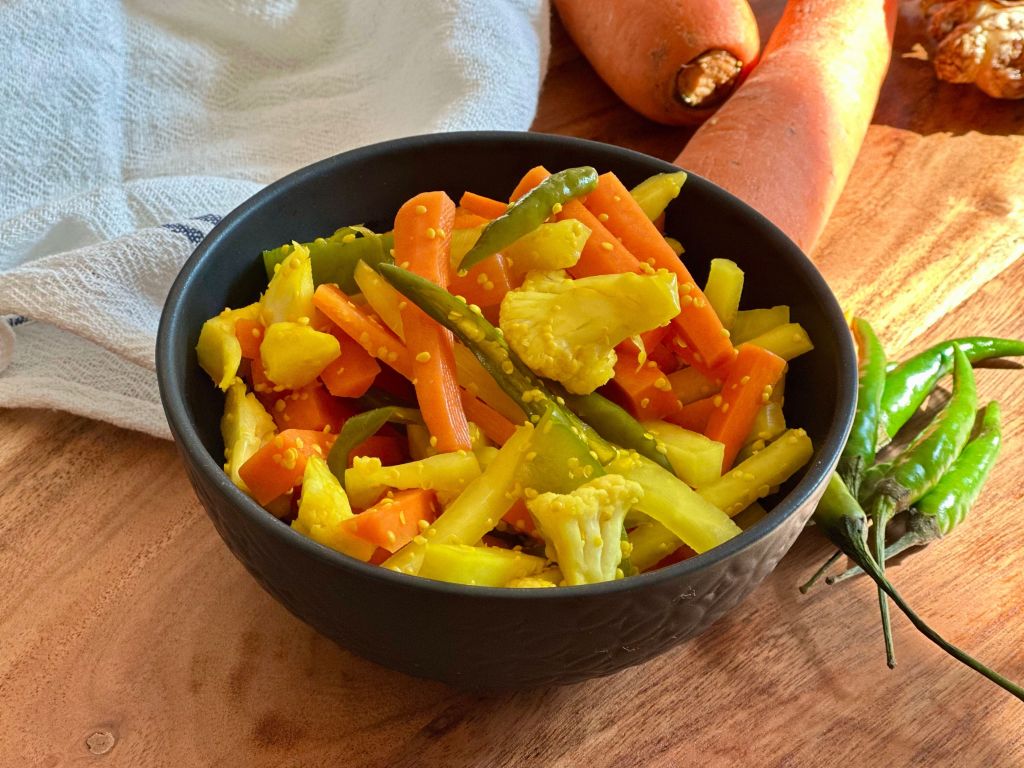
There’s something undeniably comforting about opening the fridge and finding a jar of this bright, crunchy carrot, cauliflower, and chili relish waiting for you. My MaaiL called it sirka waru athanu (pickled veggies in vinegar) or athela gajar marcha (pickled carrot and chillies), though there were always a few other vegetables sneaking their way in, some green beans here, a few tindora’s there.
Much like the kitchens I grew up in, my MaaiL’s table never went without something tangy or spicy, whether it was the traditional kachumbar, the more complicated and laborious sun-dried mango athano, or a simple green chutney. Pickles were never an afterthought; they were a core part of the meal, shaped by what was in season and what the kitchen had to offer.
This brined pickle was a condiment that lived on her table. She had a zest for spicy food and an even bigger love for equally fiery relishes. A bowl of this would show up at every meal- except breakfast….. well maybe I am lying, she did pull this out for breakfast well.
This style of quick-pickled vegetables is something you will find all around the world, each version shaped by the local pantry and palate. In Italy, there’s giardiniera a colorful medley of vegetables pickled in vinegar and sometimes oil, served with antipasti or tucked into sandwiches. In Latin America, encurtido is often made with carrots, onions, and jalapeños, and served alongside pupusas or grilled meats. And in the Middle East, torshi is a sharper, often long-fermented pickle found at almost every table, from Iran to Lebanon.
But this Indian version? It is the fiery, no-frills cousin, spiked with green chilies, skinned split mustard seeds(rai na kuria), turmeric, and enough vinegar to make your taste buds sit up straight. Using what’s seasonal and local, this pickle is more than just a side, it’s a little jar of regional tradition, passed down and adapted across generations.
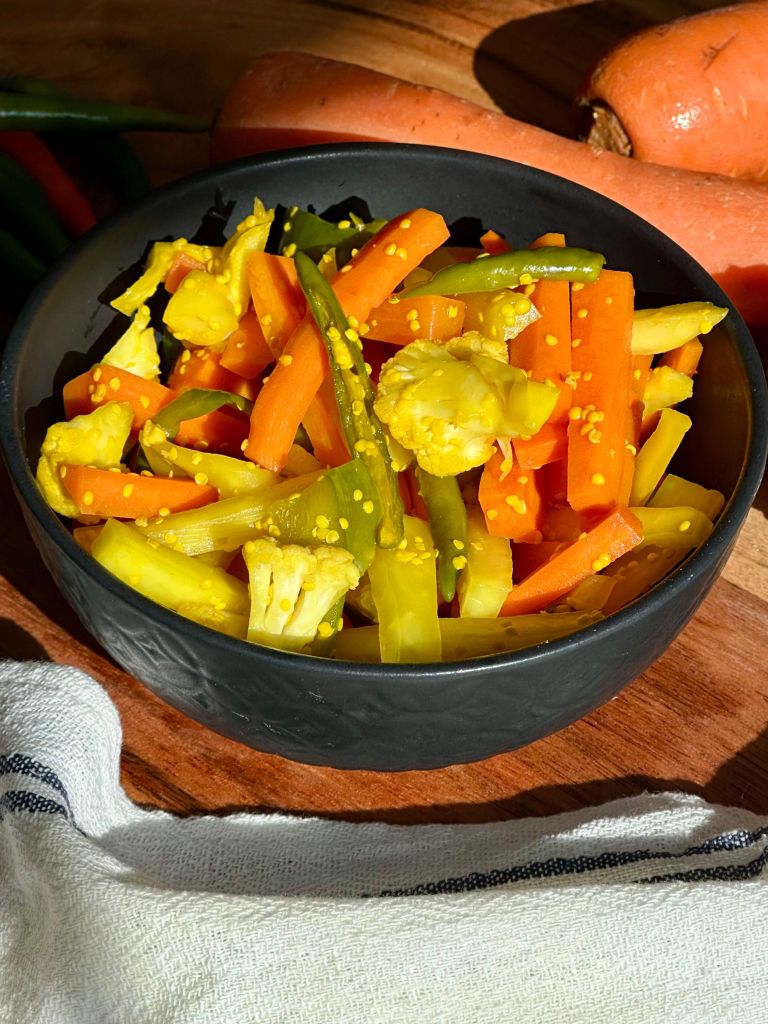
This pickled relish follows that same spirit. It is flexible, fast, and uses ingredients you already have at home, or use what you have, root vegetables like carrots and cauliflower, some slit green hot peppers, julienned fresh ginger, a handful of French beans, a few tindora, a splash of vinegar, and rai na kuria (split mustard seeds with their skins removed), then a quick toss, and you have a bright, punchy pickle that tastes like home.
This recipe requires no fancy equipment, no canning-just time in the fridge. The brine does all the work, and the longer it sits, the better it tastes.
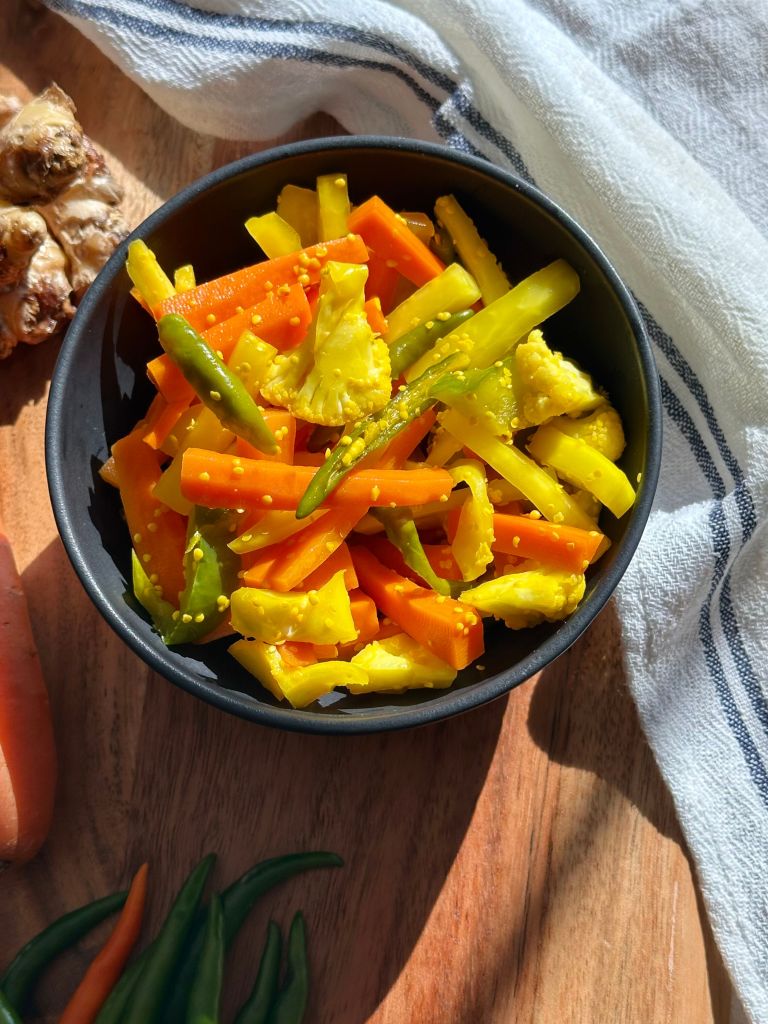
Make a small jar just for yourself, or double it up for guests. It’s one of those fridge staples that complements whatever you’re serving. It is easy to make, and almost impossible to keep around for more than a few days. Refrigerate it overnight, and it’s ready to go, and pairs perfectly with East African pilau, khichdi, or even a slice of buttered toast (don’t knock it till you try it).
What is Rai na Kuria?
One of my earliest pickle memories is watching my Mum and granny sun-dry whole mustard seeds in wide trays on the veranda. Once they were dry and sun toasted, we would crush them-not in a fancy grinder or with a rolling pin but with an empty glass bottle! That simple, hands-on ritual turned those little seeds into rai na kuria-the heart of our pickles, the garnish to our raitas.
For the longest time, I didn’t even know there was any other way to make them. It wasn’t until I moved to the U.S. and spotted them neatly packed in little bags at the Indian store that I realized most people didn’t have to sun-dry and crush their own. But for me, it’s always been about that memory, that rhythm of the past, because the best flavors often come from tradition, not tools.
Rai na kuria (also called mustard dal or split mustard seeds) are mustard seeds that have been hulled and split, leaving behind their yellow interior. Unlike whole black or yellow mustard seeds, they have a milder flavor and a slightly grainy texture that clings beautifully to vegetables in pickles.
It is a signature ingredient in many Gujarati pickles. You will find it in Indian grocery stores, usually in the spice section.
Look for: “Rai na Kuria,” “Mustard Dal,” or “Split Mustard Seeds (Yellow)”
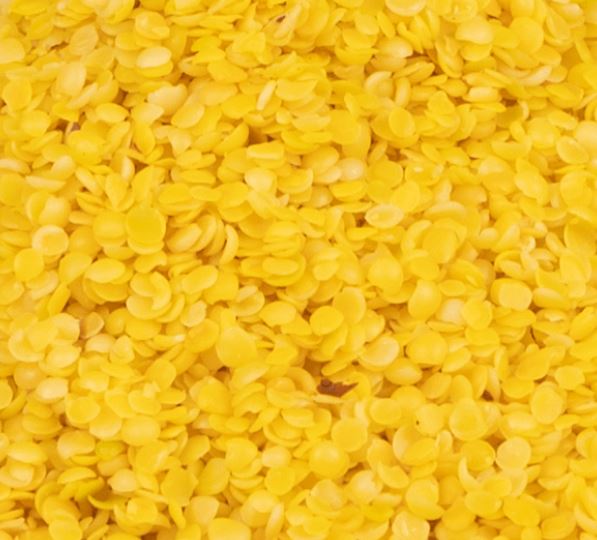
Ingredients:
- 2 medium carrots, peeled and cut into ¼-inch matchsticks
- 1 cup cauliflower florets (bite-sized)
- 8 green chilies (Thai, serrano, or jalapeños), slit or thinly sliced
- 5 ivy gourds (tindora/giloda), cut into matchsticks
- ½ cup green beans, julienned
- 1 tbsp julienned fresh ginger (optional)
- 1¼ tsp salt (adjust to taste)
- ¼ tsp turmeric powder
- 1½ tbsp rai na kuria (split mustard seeds)
- 1 cup distilled white vinegar
- 1 cup warm water (adjust up to 1.5 cups if your vinegar is very strong or sharp to taste or if you prefer a milder brine)
Instructions:
- Cut all vegetables into matchsticks or small, even pieces.
- In a large bowl, toss the vegetables with salt and turmeric. Let them sit for 30 minutes until they begin to release water.
- After resting, add warm water, vinegar, and rai na kuria. Mix well.
- Transfer the mixture (with all liquid) into a clean glass jar, leaving about ½ inch of space at the top.
- Seal the jar and refrigerate for at least 8 hours. The longer it sits, the better the flavor.
Notes & Tips from My Kitchen:
Cut all your vegetables into thin, even matchsticks or bite-sized pieces. This ensures they absorb flavor quickly and stay crisp.
Toss the veggies with salt and turmeric, then let them sit for 20–30 minutes. This draws out excess moisture and helps them stay crunchy in the brine.
Rai na kuria (split mustard seeds) are key to that distinct Gujarati pickle flavor. You can find them at Indian grocery stores.
White distilled vinegar is classic and sharp.
Give your pickle at least 8 hours in the fridge before eating—overnight is even better. The flavors deepen, and the vegetables develop that irresistible sweet-sour-spicy balance.
Store in a clean, dry, airtight glass jar. This pickle keeps well in the fridge for 2–3 weeks.
If you make this quick pickle, I would love to know how you enjoy it-wrapped in warm rotli, along with your Sunday biryani, or with your own twist! Tag me or leave a comment below. Your table, your style!

 Nadia's Meza recipes
Leave a comment