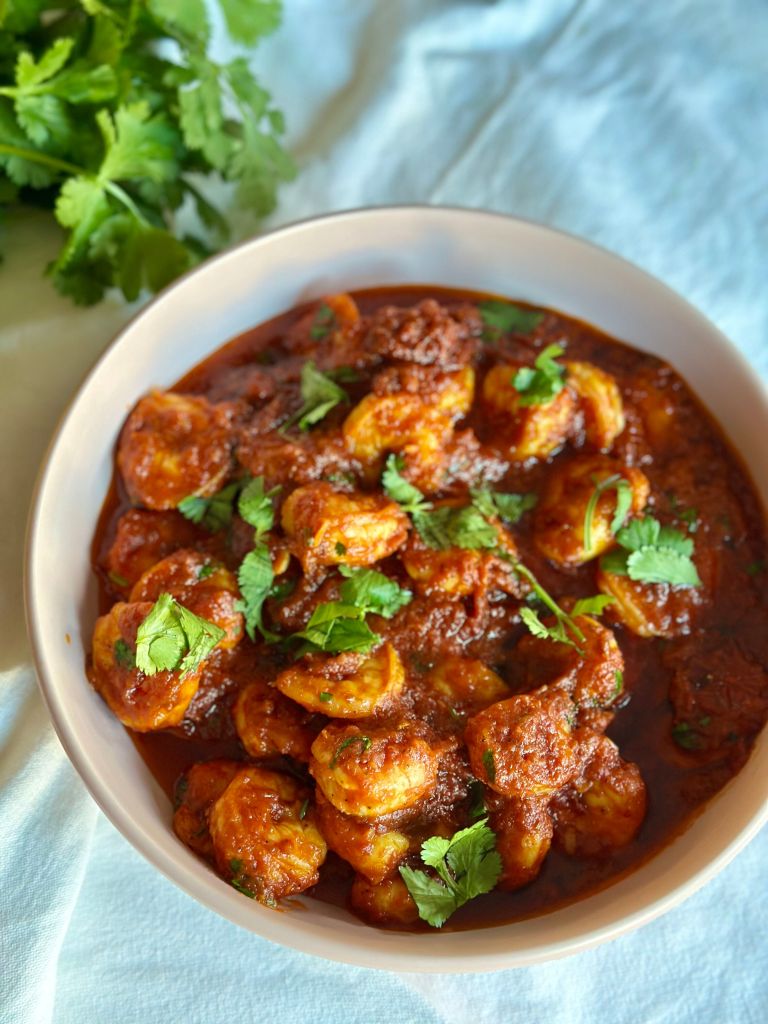
Of all the frozen proteins I could reach for on a weeknight, shrimp—or sonia, as my MaaIl called them—are the quickest to thaw. I just pour them into a bowl of cool tap water and by the time I assemble the kachumbari, they’re thawed, ready to be seared, and soak up all that flavor from the simple sauce.
This is exactly the kind of recipe I wanted to post today: quick, but full of bold flavors, made with ingredients I usually have on hand. And if I’m being honest? I lose steam mid-week to make dinner that my family will rave for days later, and I need easy wins like this—recipes that remind me why I love to cook in the first place. These garlicky, buttery prawns do just that.
There’s a special kind of magic that lives along the Swahili coast. The aroma of grilled corn, muhogo (cassava), meats, and seafood—those smoky, spicy scents only found on the shores of East Africa—drift in with the warm ocean breeze. They dance past fishing boats bobbing on the tide, through markets where woven vikapu brim with dried chilies, turmeric, cinnamon bark, and the heady perfume of cardamom and clove.
Whether savored at a bustling roadside eatery in Mombasa, along the winding alleys of Stone Town in Zanzibar, or beside a seaside grill in Tanga or Dar es Salaam, spicy prawns have long held their place on the Swahili table—rooted in a blend of African, Arab, Indian, and Portuguese influences that define the coast’s rich food heritage.
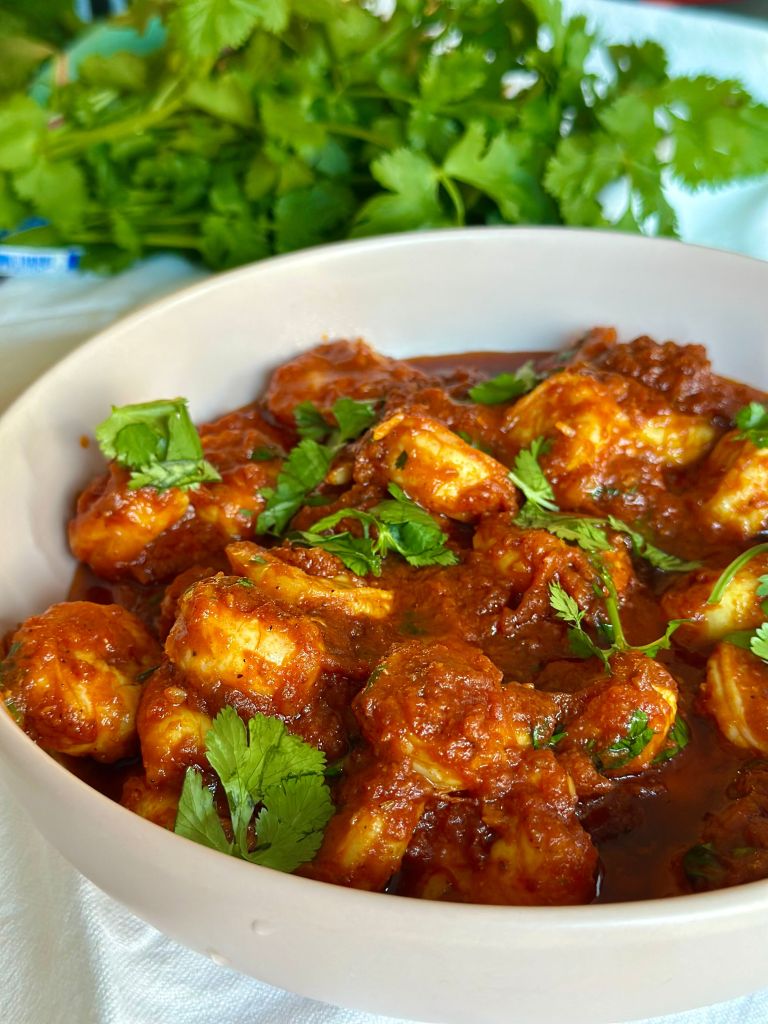
The Swahili coast is more than a place—I would say it is a living pantry of bold flavors and unforgettable street food. Whether you’re meandering through Old Town Mombasa or catching the golden hour at Forodhani Gardens, you’ll find a delicious mosaic of coastal classics: fried or flame-grilled seafood, crabs, octopus, fish fresh from the ocean to flame in a matter of hours, cooked whole, head, tail, and eyes intact, served with lime wedges, a heap of kachumbari and a fiery bold scoop of pili pili sauce, charcoal-seared mishkaki, crispy bites of viazi karai, or cassava kissed with lime and chili.
Among the many culinary treasures of this region, the fiery Pili Pili Prawns are a must to try. This dish brings the essence of that world straight to your table—no passport required. Just the warmth of spice and the timeless, multiethnic spirit of coastal cooking. It’s a plateful of celebration—of sun-soaked shores, sea breeze, and the deeply layered flavors that stretch from Mombasa to Zanzibar.
You might notice I use the word prawns throughout this recipe—but truth be told, growing up, we used the word prawns for everything, even what’s technically shrimp. It was just the common terminology in my home, and my MaaIl called them sonia.
While prawns and shrimp are often used interchangeably in recipes, there are some technical differences. Prawns tend to be a bit larger and have straighter bodies, while shrimp usually curl more when cooked. The size and shape can affect cooking time slightly, but honestly, either will work beautifully in this dish.
From your first bite, you will taste the history, the heritage, and the soul of East African cuisine.
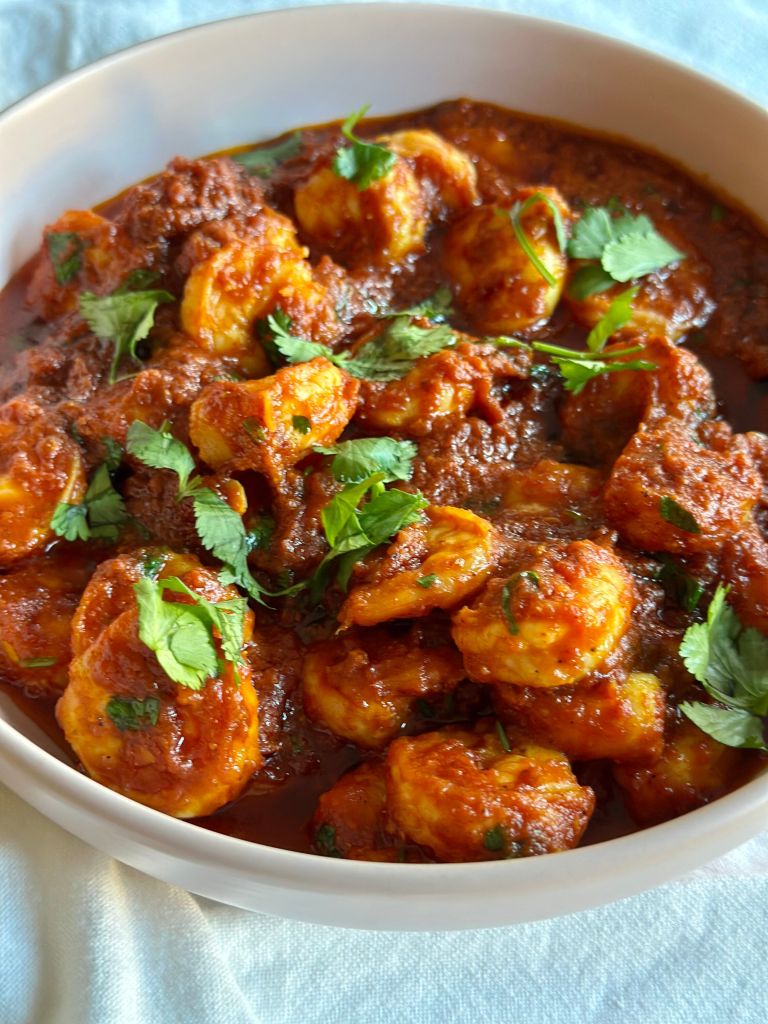
Ingredients:
For the Shrimp(about 25 shrimp / 350g):
- 25 peeled & deveined shrimp (31–40 count per lb), if frozen then thawed and patted dry.
- 1/2 tsp turmeric (optional)
- 1/2 tsp salt (optional)
- 2 tablespoons neutral oil
For the Sauce:
- 3 tablespoons butter (traditionally, Poussin or Peri Peri sauce is made with margarine, but butter adds a richer flavor)
- 1 tablespoon oil (or use the left over from above)
- 2 teaspoons garlic paste
- 3 tablespoons tomato paste
- 2 tablespoon blended fresh tomato (or thick tomato sauce)
- 1 teaspoon ground black pepper
- 1 teaspoon salt (adjust to taste)
- 1 teaspoon dhana jeera (ground coriander-cumin powder)
- 1/2 teaspoon turmeric powder
- 1 teaspoon chili powder (adjust to heat preference)
- 1/2 teaspoon garam masala
- Juice of 1/2 lime (be generous with the lime juice here, plump shrimp like a lot of acid.)
- 2 tablespoons of chopped cilantro
Instructions:
- In a bowl, toss the cleaned shrimp with turmeric and salt (this step is optional you don’t have to).
- Heat 2 tablespoons oil in a nonstick pan over medium heat.
- Briefly sauté the shrimp for 1–2 minutes per side, just until they start to turn pink. Do not cook fully. Remove and set aside.
- In the same pan, using the leftover oil from the shrimp—it’s packed with flavor, add butter/margarine and extra oil if needed to prevent butter from burning.
- Sauté the garlic paste until fragrant.
- Add tomato paste and cook until it darkens slightly—about 1–2 minutes.
- Stir in the blended tomato, black pepper, salt, dhana jeera, turmeric, and chili powder.
- Let the sauce simmer gently for 4–5 minutes until thickened and the oil begins to separate.
- Add the sautéed shrimp back into the pan, along with any resting juices—they carry so much flavor and help enrich the sauce.
- Toss to coat and cook for 2–3 more minutes until fully cooked through.
- Finish with squeeze of lime juice, garam masala, and chopped cilantro.
- Serve hot, accompanied by kachumbari and a side of crusty bread or chapatti to mop up that sauce, or even potato or fried yuca/cassava.
Watch me make it here:
Notes from my kitchen:
Why I use butter instead of margarine:
Traditionally, a Poussin or Peri Peri-style sauce is made with margarine—it gives that classic clingy texture and gloss you’ll often find at grills along the Swahili coast. But in my kitchen, I reach for butter since we don’t use margarine.
Why sauté the shrimp first?
Shrimp release a lot of moisture, especially if frozen and thawed. Adding raw shrimp directly into the sauce can dilute the flavor and ruin the texture.
By sautéing them first:
+ You seal in their flavor
+ Prevent excess water from thinning your rich, bold, and silky sauce
How I serve this dish:
A must have- some crusty bread to mop up every drop of that fiery sauce. At home, I often plate it with kachumbari and chapatis for that perfect swipe-through-the-sauce moment. You can serve it with a side of potato or yuca fries.
Pili Pili or Peri Peri?
You might wonder—is it pili pili or peri peri? The answer is both, and it’s a delicious tale of history.
The Swahili word pili pili means “chili chili,” referring to the native small, fiery bird’s eye chili. The Portuguese meanwhile, during their voyages along the East African coast in the 15th and 16th centuries, encountered this chili and adopted it into their own kitchens—calling it piri-piri or peri peri.
Over the centuries, the chili traveled across oceans and empires—from Mozambique to Goa to Brazil—becoming the heart of spicy sauces and marinades in Portuguese-influenced cuisines.
In East Africa, pili pili evolved with local flavors: garlic, turmeric, dhana-jeera (coriander-cumin), and lime. In Portuguese cuisine, peri peri sauce often leans into vinegar, oil, and lemon.
So whether you’re grilling prawns on a beach in Mombasa or tucking into spicy peri peri chicken in Lisbon, you are tasting a fiery legacy of shared trade winds and culinary exchange.
Did you make this recipe?
I love seeing what’s cooking at your place! Tag me on Instagram or leave me a comment below.

 Nadia's Meza recipes
Leave a comment