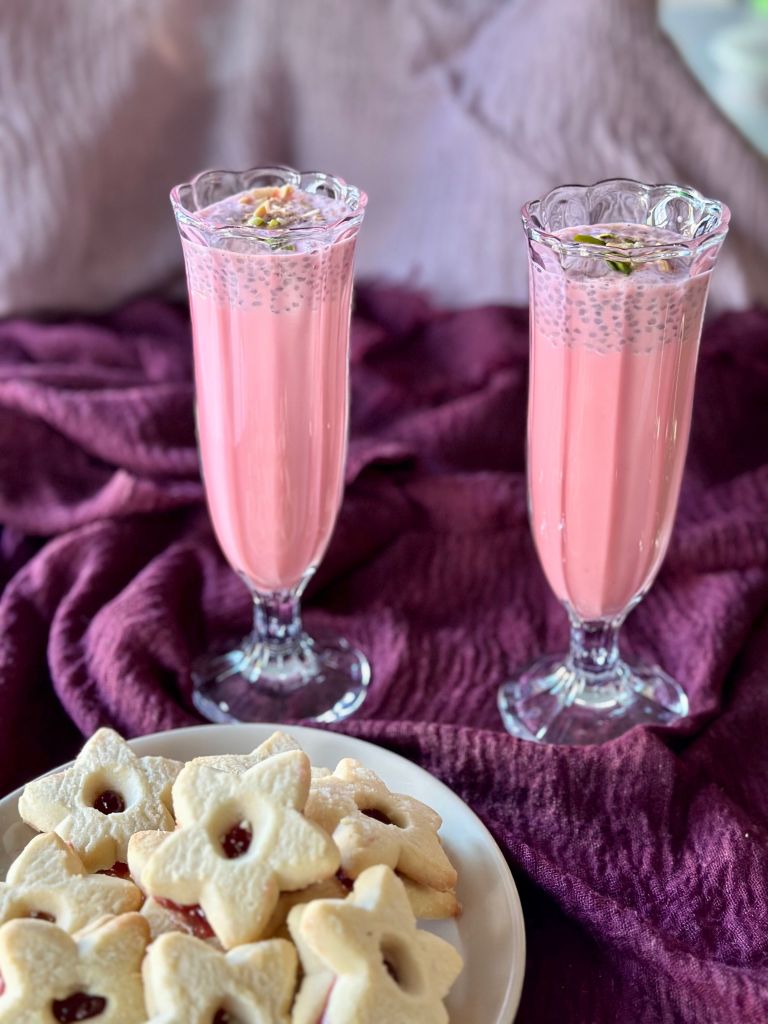
A timeless classic in a modern world, where Matcha lattes, Boba teas, and gourmet Pistachio and Kunafa milkshakes dominate menus, these old-school, simple, favorite, time-honored drink remains unmatched in its cooling effect and nostalgic charm. No amount of fancy toppings or trendy flavors can replace the soothing taste of a well-made Sharbat, Bombay Crush, or Falooda. My only addition to this classic recipe is a a couple of shaves of nutmeg, a pinch of cardamom powder and a few saffron pistils. While completely optional, I find it adds a lovely exotic and warming flavor to the milk.
For many of us who grew up in East African Gujarati households, Takmaria Waru Dudh was more than just a drink—it was an essential part of childhood summers, a soothing refreshment after a long day at school, and a staple at family gatherings, to mark the start of spring and Nowruz. In some South Asian traditions, a woman drinking sherbat signifies her acceptance of a groom’s proposal, marking the beginning of their engagement. This is sometimes referred to as the Doodh Pilai ceremony, where the groom also drinks milk or sherbat as a symbolic gesture of accepting the engagement terms.
Back home in East Africa, we called it Takmaria Waru Dudh or simply Sharbat. South Africans, particularly in Durban, know it as ‘Bombay Crush,’ thanks to Mullah’s Café, where it was first popularized as a milkshake. And, of course, many across the Indian subcontinent would argue and call this ‘Falooda’—or at least some version of it.
Across East Africa, however, our version was simple yet deeply satisfying. At home, my mum always called it Takmaria Waru Dudh, and in hindsight, it must have been to distinguish it from the many other milk-based drinks in our Gujarati household- Masala Doodh, rich with warming spices and nuts, was reserved for colder months or Doodh Pak, a sweet, pudding-like dish made with slow-cooked milk and rice, and dotted with charoli seeds and almonds for festive occasions.
But Takmaria Waru Dudh? That was the ultimate summer refresher. A simple mix of chilled milk sweetened with rose syrup, and takmaria(basil seeds), this drink had a cooling effect like no other. My mum would add vanilla ice cream to make it creamy; but other days, she’d lighten it with water or more milk to make it more hydrating.
On the hottest afternoons, we’d gulp it down, the bloomed basil seeds bursting between our teeth, each sip leaving behind the delicate floral notes of rose. We would scream in glee that we were having frog eggs or baby tadpoles! My sibling, friends and I would peer into our glasses, swirling our spoons through the pink milk speckled with tiny seeds, daring each other to drink it first—half thrilled, half horrified at our own imagination. Of course, we knew better—but in the world of childhood imagination, a simple glass of Sharbat could turn into the most thrilling adventure.
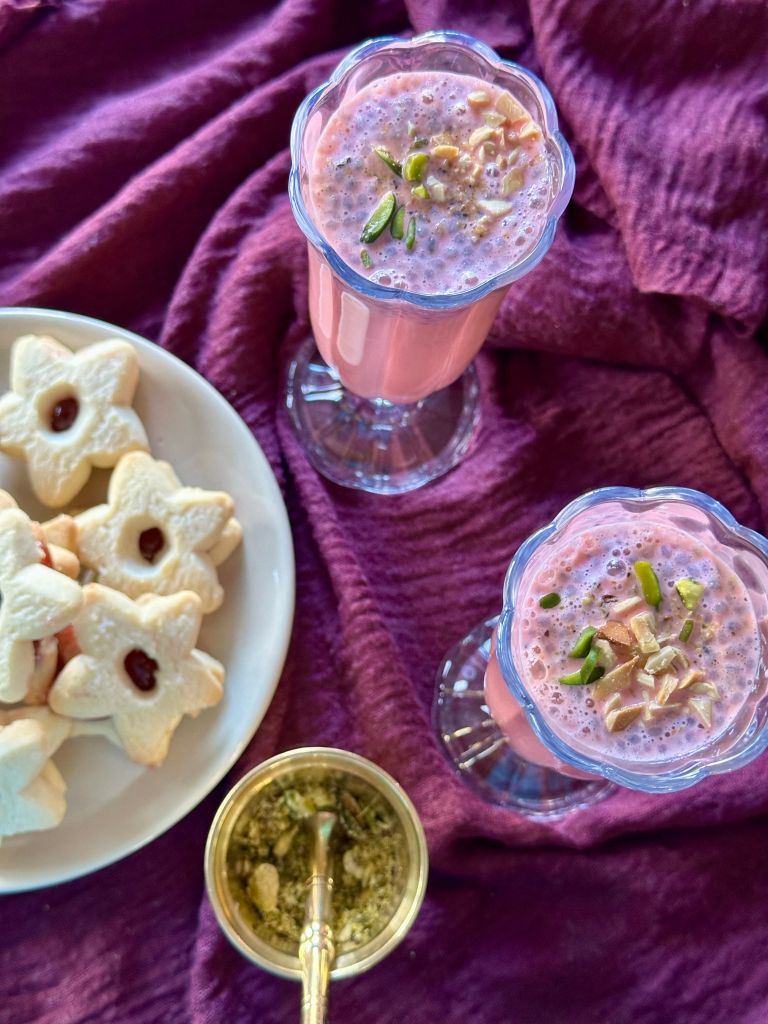
Whether enjoyed as a celebratory drink at weddings or events, a simple refreshment after fasting or an indulgent dessert-like treat, this age-old drink continues to stand the test of time. While each variation is unique, they all share the same base of rose syrup, milk, and basil seeds, giving them their signature floral, refreshing taste. The main difference? Sharbat is simple and light, Bombay Crush is thicker and creamier, and Falooda is a full-fledged dessert in a glass.
The origins of this drink trace back to Persia, where an early form of it was enjoyed long before it made its way to the Indian subcontinent between the 16th and 18th centuries. Its name traces back to the Turkish şerbet, Persian sharbat, and Arabic sharba. Traditionally crafted as a concentrated blend of fruits or flowers, it is diluted before serving. While often sweetened, some variations include subtle spices, enhancing its naturally cooling effect. Once in South Asia, it evolved into Falooda, with different regions adding their unique touches. In India and Pakistan, it often includes vermicelli noodles, jelly, and sometimes sago pearls, making it more of a dessert than just a drink.

Ingredients:
- 4 cups Organic Grade A whole milk, chilled
- 1 can evaporated milk, 12 fl. oz.
- 2/3 cup or 3/4 cup condensed milk (depending on how sweet you want your sherbet)
- 1 cup vanilla ice-cream
- 1/2 cup or 8 tablespoons Dabur Rose Syrup (see notes)
- ¼ teaspoon cardamom powder
- Pinch of nutmeg powder (optional)
- Few Saffron pistils
- Unsalted pistachios, Crushed or finely chopped
- Almonds, Finely sliced (preferably with skin removed)
- 8 tablespoons Sweet Basil Seeds/ takmaria seeds, soaked (estimate 1 tablespoon per glass)
Makes about 8 glasses
Instructions
- Prepare the Basil Seeds: In a small bowl, add the basil seeds to 1 cup of room temperature water. Stir well and set aside to allow them to swell and become gelatinous. (These can also be prepared a day or two in advance and stored in the refrigerator.)
- In a large mixing bowl or jug, combine the chilled whole milk, evaporated milk, and condensed milk. Stir well until fully blended. Adjust the sweetness by adding more or less condensed milk, based on preference.
- Add the rose syrup, cardamom powder, and a pinch of nutmeg (if using). Stir until the flavors are evenly distributed.
- Add the vanilla ice cream and whisk gently until it dissolves into the mixture, giving the sherbet a rich and creamy texture.
- Crush the saffron pistils slightly between your fingers and sprinkle them into the sherbet. Allow the mixture to sit in the refrigerator for at least 30 minutes to let the flavors meld.
- When ready to serve, stir the soaked basil seeds and distribute them evenly among 8 glasses. Pour the chilled rose-milk mixture over the seeds, filling each glass.
- Top with crushed pistachios and finely sliced almonds.
Watch me make it here!
Notes:
| Drink Name | Key Ingredients | Texture |
| Sherbat / Rose Milk | Rose syrup, milk, condensed milk, evaporated milk, basil seeds, ice, (ice cream), nuts | Light, cooling, and simple |
| Bombay Crush | Rose syrup, milk, condensed milk, evaporated milk, basil seeds, ice cream, sometimes falooda vermicelli | Creamy, thick, and milkshake-like |
| Falooda | Rose syrup, milk, condensed milk, evaporated milk, vermicelli, basil seeds, jelly, ice cream, nuts | Rich, dessert-like, often topped with nuts |
To Boil or Not to Boil?
Back home in Africa, way back when I was younger, milk was never just poured straight from a carton or bottle. It arrived fresh—sometimes still warm from the cow—and required a careful boiling ritual before it could be used. This was more than just a precaution; it was a practice deeply ingrained in our daily lives. The milk would be heated until it rose to a frothy peak, threatening to spill over, at which point someone would expertly remove it from the heat just in time.
Boiling milk served multiple purposes. It killed bacteria, of course, ensuring it was safe to drink, but it also served another purpose, when a thin layer of cream would form on top, and Mum would scoop it off and churn it to make fresh butter.
Today, milk is pasteurized before it reaches our homes. It’s a marvel of modern convenience—ready to use straight from the jar or carton, no boiling required. Which in turn makes life easier, when making this Sherbet!
So, to boil or not to boil? While it’s no longer a necessity, it remains a tradition worth savoring—one that links us to the past, to our ancestors, and to the simple joys of home-cooked memories.
Sweet Basil Seeds(Takmaria / Sabja Seeds) Also known as Tukmaria, these tiny seeds come from the basil plant and have been a staple in Indian and Asian cuisine long before Boba pearls took over. When soaked in water, they develop a gelatinous, tapioca-like texture within a few minutes, adding a fun, chewy element to drinks. Unlike chia seeds, they require soaking before eating, expand much faster and have zero net carbs, are packed with more fiber, iron, calcium, and magnesium, and also support gut health by acting as a prebiotic, helping beneficial bacteria thrive. Some even swear by their ability to regulate blood sugar levels, aid digestion, reduce inflammation and stress as well as improve overall mental well-being.
Can I use Rooh Afza instead of Rose Syrup:
I would say NO!, Dabur Rose Syrup and Rooh Afza are both floral-based syrups used in drinks and desserts, but they have distinct differences.
Dabur Rose Syrup is primarily rose-flavored, made from rose extracts and sugar, giving it a pure, floral, and slightly sweet taste. It’s ideal for making rose milk, falooda, or as a dessert topping. Its single-note flavor makes it perfect for where you want a distinct rose taste.
Rooh Afza, on the other hand, is a complex blend of ingredients, including rose, kewra, sandalwood, citrus fruits, and herbs. This results in a more layered, herbal, and slightly tangy-sweet taste compared to the straightforward floral sweetness of Dabur Rose Syrup, is more versatile, used in water based sherbets, milk, desserts, and even fruit salads due to its richer, herbal profile.
Ice Cream:
For a simple, delicious vanilla ice cream with minimal ingredients, consider a brand known for known for its creamy texture and pure vanilla flavor, made with just cream, skim milk, egg yolk, cane sugar, and vanilla.
Here’s a breakdown of my favorite options:
Häagen-Dazs Vanilla Ice Cream: Cream, skim milk, egg yolk, cane sugar, and vanilla.
Breyers Natural Vanilla Ice Cream: Made with just five ingredients: milk, cream, sugar, vegetable gum, and natural flavor.
Tillamook Vanilla Bean Ice Cream: A popular choice for its high-quality ingredients and rich vanilla flavor.
Alec’s Tahitian Vanilla Bean: Cream, Skim Milk, Cane Sugar, Egg Yolk, Tahitian Vanilla Extract, Less Than 0.5%: Carob Gum, Guar Gum, Vanilla Beans.
Did you make this recipe?
I’d love to see! Tag me @spicymemsahib on Instagram.


 Nadia's Meza recipes
Leave a comment