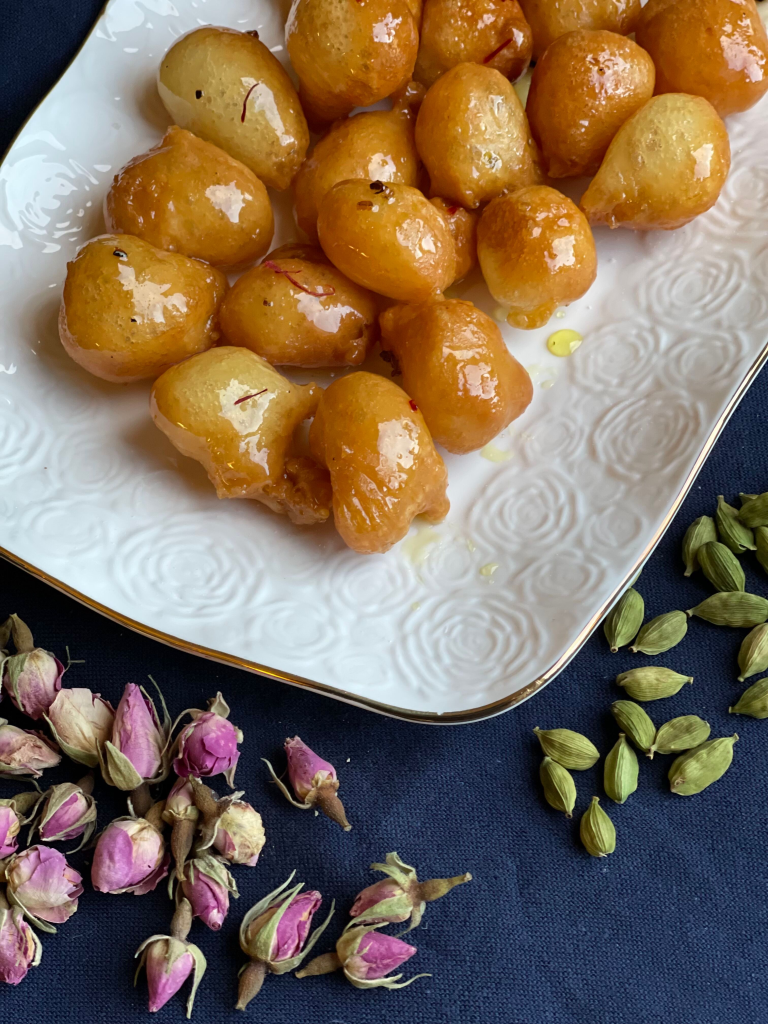
Kaimati/Kalmati/Meetha Bhajia/ Goolgoolas/Luqaimat /loukoumades /Lokma – to each his own.
From Tanzania to Turkey or Greece to India everyone has their unique version of these delicious sweet dumplings. The dough is all very similar but the syrups and toppings is what dictates its origins. In Zanzibar or Tanzania these are dunked in a simple sugar syrup infused with cardamom and saffron.
What do you call them? This is a perfect example of the many anomalies between my MaaIL and me! Recalling her mentioning that she wanted to make Dahi Vadas, she had my undivided attention, coming from a Gujarati household where my Mum was the Queen of Dahi Vadas, my mind raced to the soft spongy spicy lentil fritters in a sweet, salty seasoned yoghurt sauce- but wait…. she says not those Dahi vada’s …..Let me show you another type, that’s when she started calling them Meetha Bhajiya!
Again this is another recipe that’s taken time to perfect as she used to just eyeball the ingredients.
My MaaIL liked them spongy and I prefer to have a crunch on the outside and a light and airy inside- hence my love for jalebis and sweet boondi and slight variation from her recipe by using cornstarch.
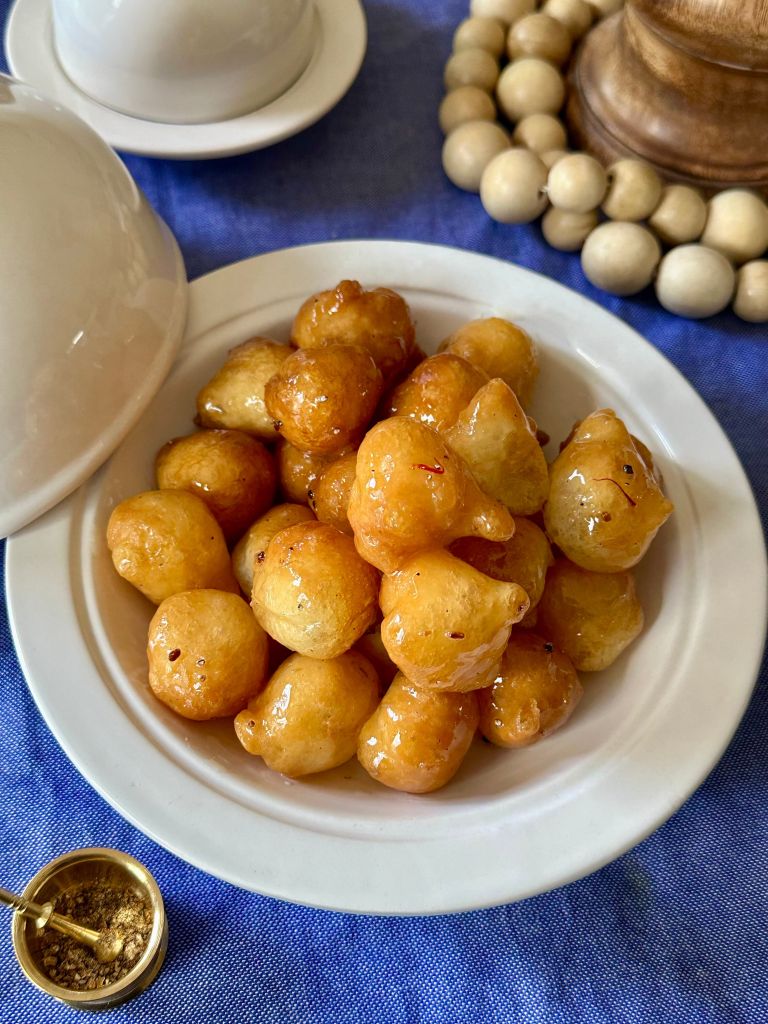
Ingredients:
- 1-cup All-purpose flour (may need 1 tablespoon more)
- 3/4 cup water (1/2 +1/4)
- 1 tablespoon corn starch
- 1 tablespoon active yeast
- 1/2 tablespoon white sugar
- 2 tablespoon plain yoghurt
- 1 tablespoon neutral oil
For the Syrup
- 1 cup white sugar
- 1 cup warm water
- 1/2 teaspoon crushed cardamom seeds
- 1/2 teaspoon lemon juice
- Few Saffron pistils
Instructions:
Syrup:
- Place sugar, water and lemon juice in a heavy bottomed saucepan and stir to dissolve the sugar.
- Place the pan on a stove and turn the heat onto medium high.
- Slightly crush the cardamom pods and a pinch saffron pistils add them in the syrup.
- Allow the syrup to simmer until it slightly starts to become sticky for about 10 minutes or until it reaches 110°c on a candy thermometer. The syrup should coat a spoon when ready.
- Remove from the heat and leave it to cool
Kaimati
- Bloom your yeast into the warm water and leave for 5 minutes.
- Add plain flour, cornstarch, yoghurt and then the yeast water into a large bowl.
- Mix well with your hand or a wooden spoon, incorporating air keep whipping until you get a smooth lump free tacky batter ( like Oobleck).
- Cover the bowl with a lid and leave in a warm place to rise for about 1 hour or so.
- Once the batter has risen, mix the dough again to deflate the trapped air bubbles.
- heat up your oil in a wok to a medium heat.
- Using two teaspoons dipped oil scoop up the mixture with one spoon and gently using the other spoon slide the batter into the oil or using your fingers, pinch a small amount of the dough and using your thumb drop small balls of the batter into the oil or use a piping bag with a medium hole nozzle, then using in scissors dipped in oil cut the balls as you gently pipe the batter out. In the end it doesn’t matter if they are perfectly round or have a teardrop shape!
- * Keep oil on medium at all times!
- Using a slotted spoon, move the dumplings around and keep turning them so they cook evenly.
- Repeat the above steps until you have a wok full of little crispy dumplings but do not overcrowd.
- They should be golden and crisp within about 7-8 minutes.
- Remove from the oil and lay them on a paper towel.
- When all the balls are ready, pour the cooled syrup over them.
- Stir them carefully in the syrup and leave them for 5 minutes.
- Remove from the syrup with a slotted spoon and serve with a sprinkle of nuts.
Note:
Kaimati are best enjoyed on the day they are made, I do not recommend making them ahead as the longer they stay moist, the softer they become. Leftovers can be stored in an airtight container but keep in mind that the texture will change and they will lose their crunch.
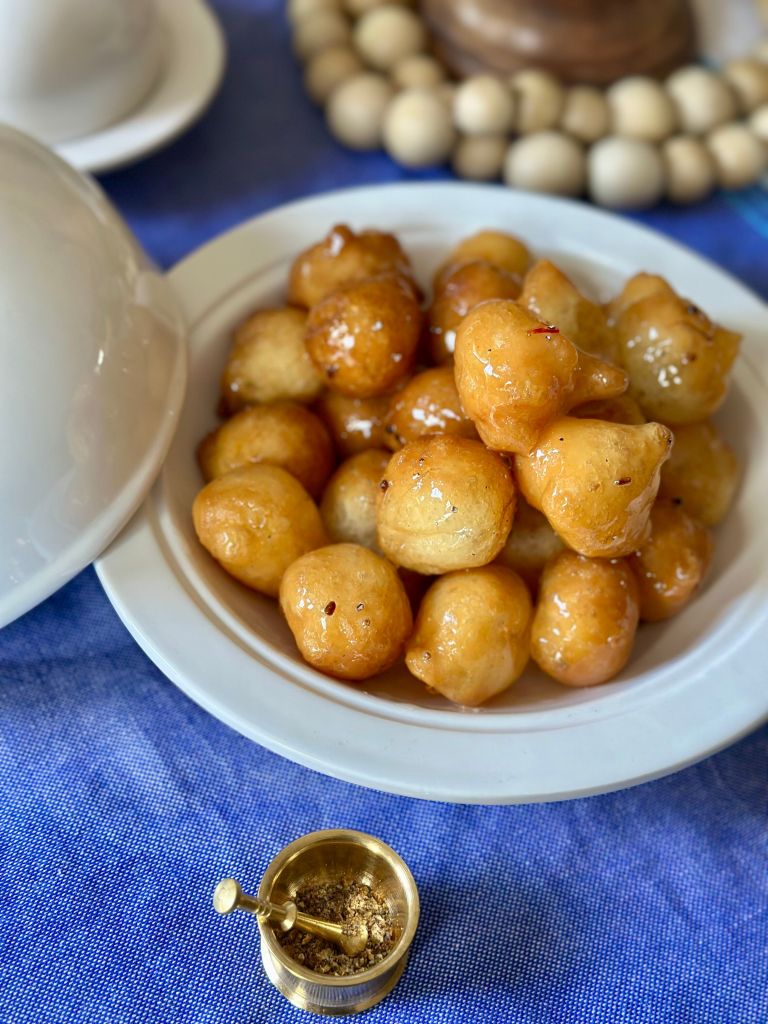

 Nadia's Meza recipes
Leave a comment