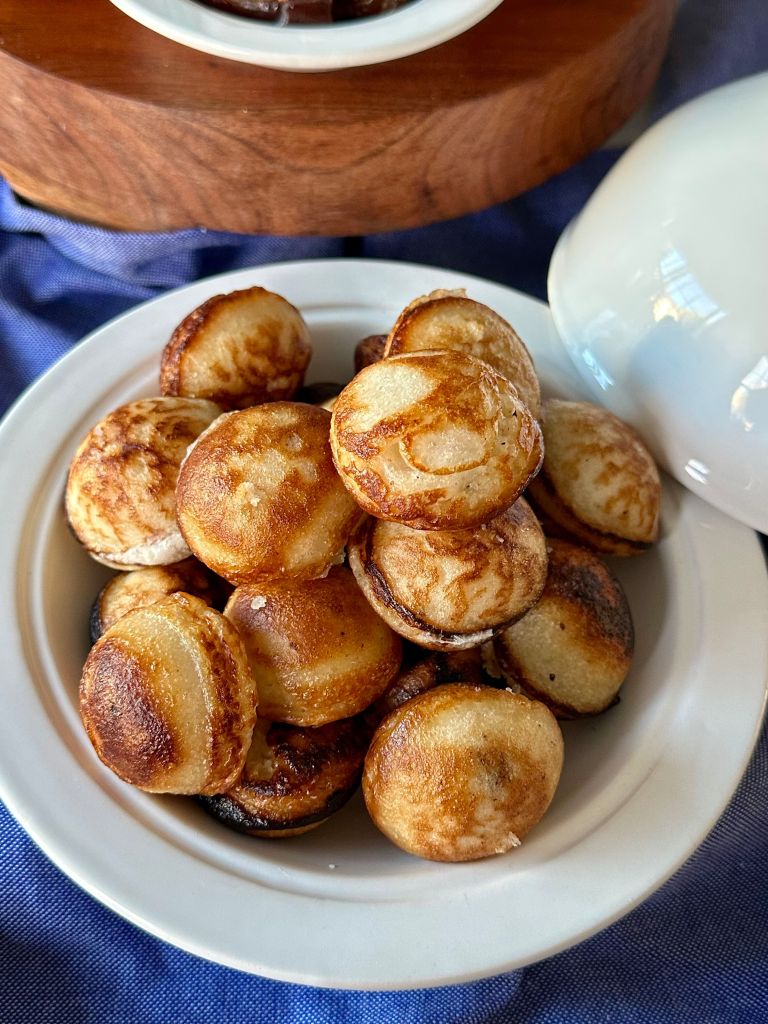
What is your favorite kind of vitumbua? I like mine slightly burnt, crisp, a bit bitter with a cup of sweet coffee.
Don’t be fooled, this is not an appam nor a donut hole, but actually a wannabe donut made with a pancake-like batter in disguise. These Tanzanian breakfast treats are bite-sized rice doughnuts or Vitumbua and are traditionally sold in the coastal areas of Tanzania and Kenya. They are light and fluffy on the inside and crisp on the outside, full of coastal flavors like coconut and cardamom, gluten-free and completely vegan.
The East African Coast or the Swahili Coast that runs from southern Somalia to northern Mozambique share many characteristics. Persian, Portuguese, Indian and British ships have anchored at their shores and as such much of their cuisine has been influenced by Indian, Somali, Yemeni and Omani food, for example in the Southern Coastal areas of Somalia, these are known as Macsharo Bariis, in parts of South India they are called Paniyaram or in Thailand the are called Khanom Kruk.
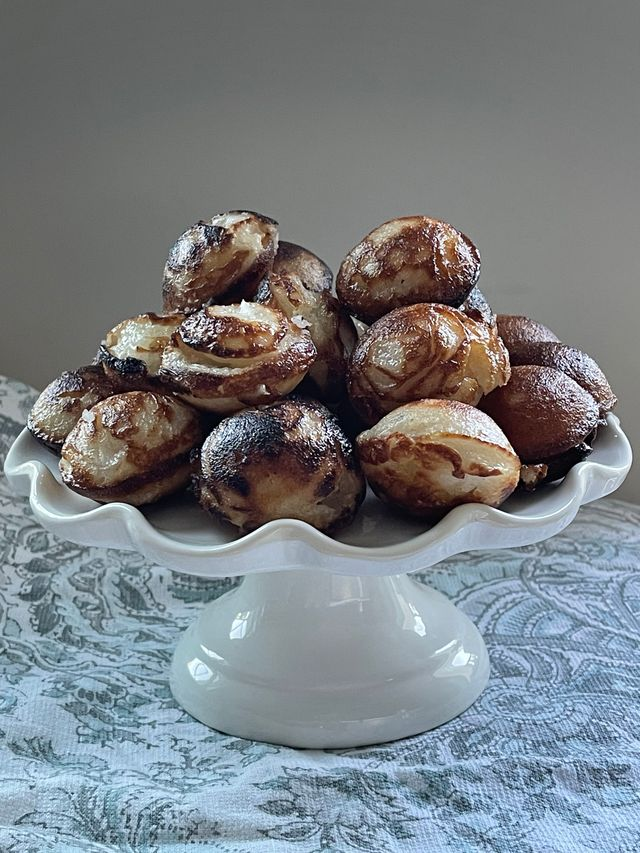
If you have ever vacationed in Tanzania or Kenya, particularly the coastal areas, you would remember waking up to the the clinking of glasses and the vitumbua sellers calling out – “vitumbua moto moto” as they would navigate the narrow, winding streets precariously balancing vats of hot Khahawa in one hand and Vitumbua or Mandazi on the other.
You can use the same batter to make the Vibibi- The East African Swahili Pancake!
Both are served with Kahawa-small cups of black, cardamom-spiced Arabic coffee.
the traditional way to prepare these is to start the day before by soaking the rice and then making your own rice and coconut batter the next day, but you can “cheat” and use finely ground rice flour instead. The only thing you will need is a Kitumbua Pan or look for a Japanese takoyaki, Danish æbleskriver or Indian paniyaram pan on Amazon.
These are gluten-free and vegan, and if you are trying my cheats version, you can sub the ALL-PURPOSE flour with 1 to 1 GLUTEN-FREE flour, or simply replace it with an equal measure of rice flour.
Ingredients:
- 1.5 cups long grain rice
- 1 cup sugar (I love them sweet, use 1/2 cup if you like them less sweet)
- 30 g. coconut milk powder
- 1 teaspoon active instant yeast
- 1 cup warm water
- 1/2 teaspoon cardamom powder
- oil to coat the Æbleskiver pan
Method:
- Soak the rice overnight, and then drain completely.
- The next day blend all the ingredients together to a smooth batter (dosa/idli like batter- need a pancake-like consistency.
- Let the batter rest for an hour in a warm place.
- Brush oil over the Æbleskiver appam/paniyaram pan and place on the stove over medium heat.
- Pour the mixture using a Chinese soup spoon ( I find this has the perfect measurement) or a tablespoon, fill the batter into the holes and fill to the top.
- Reduce the heat to low to allow the batter to cook until you see tiny bubbles form on the top- about 4 minutes.
- When you see the bottom brown, use a skewer or wooden toothpick to flip and cook the other side.
- Repeat with the rest of the batter.
- Variations: Sprinkle with cinnamon sugar, plain powdered sugar or serve with Nutella.
Cheats Version:
- 1.5 cups finely ground rice flour
- 2 tablespoons plain flour (replace the plain flour with an equal measure of rice flour for a Gluten free version)
- 1 cup white sugar (I love them sweet, use 1/2 cup if you like them less sweet)
- 30 gMs. coconut milk powder
- 1 teaspoon active instant yeast
- 1 cup warm water
- 1/2 teaspoon cardamom powder
- oil to coat the Æbleskiver pan
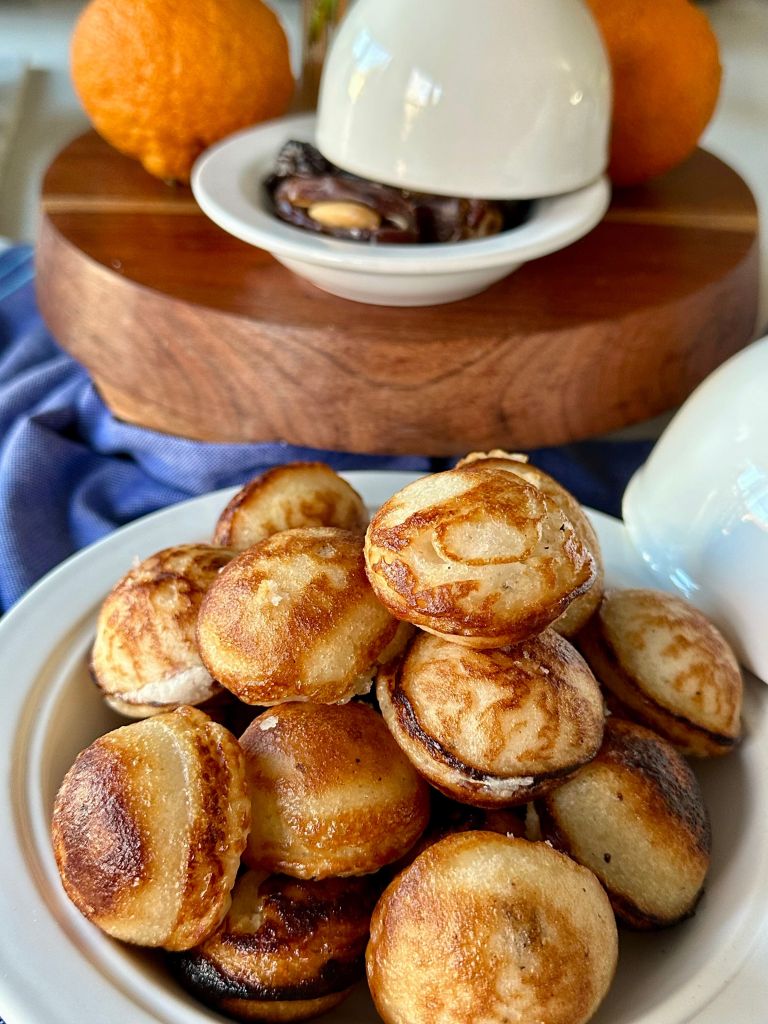
Follow the same steps as above but instead of soaking the mixture overnight, by using rice flour, you can make them the same day. Just let the mixture rest in a warm spot for 1-2 hours or until the mixture has a bubbly surface and has thickened.
Did you make this recipe?
Share a photo and tag me — I can’t wait to see what you’ve made!

 Nadia's Meza recipes
Leave a comment