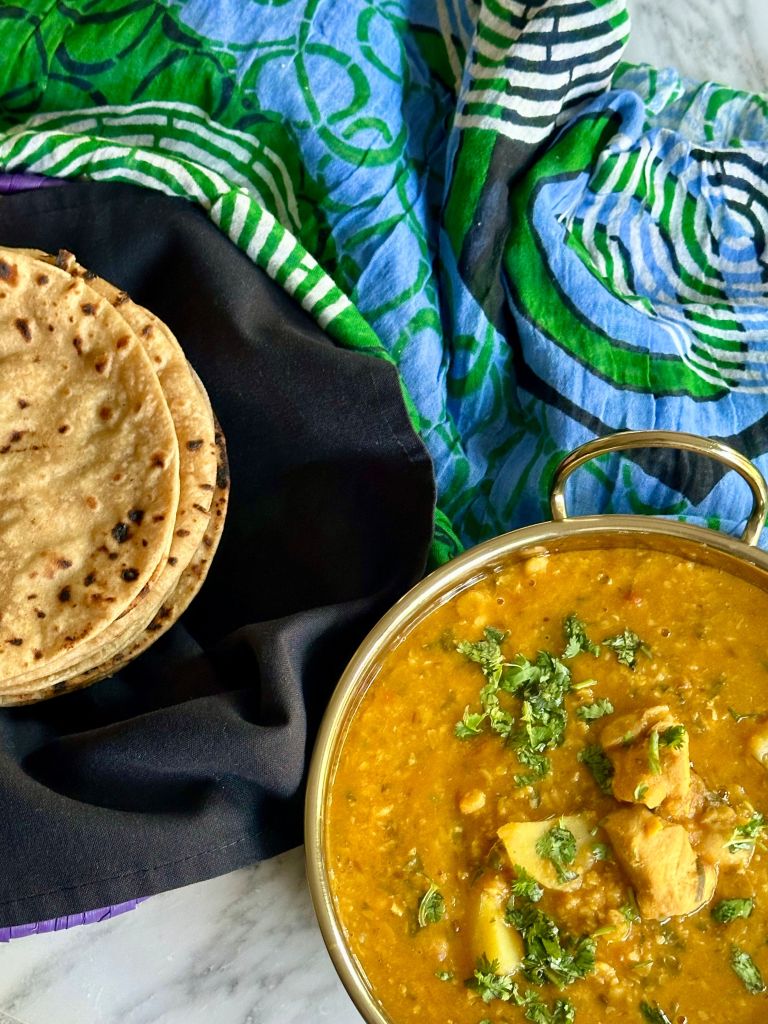
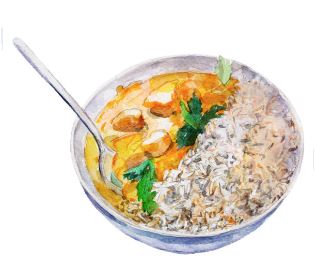
I’ve always wondered why this dish has not made it onto restaurant menus. If I had a restaurant, it would definitely be a proper weekend special— a simple, gorgeous curry — a thick, lentil-fortified gravy flecked with fenugreek leaves and tempered with the deep flavors of caramelized onions, cloves, cinnamon, fenugreek and cumin surrounding bite-size chunks of boneless chicken cubes (or any red meat) and mound steamed basmati rice. It tastes, to me, of comfort. Across India and Pakistan, this is a staple in many Muslim households, often made with just channa dal and meat. It’s a clever way to stretch the meat while still creating a rich, flavorful curry.
This Gosht wari Daar is a simple yet quintessential East African Khoja homestyle curry, usually made with Chana Dal (yellow split chickpeas), Toovar Dal (split yellow pigeon peas), husked Masoor dal (Split Red lentils) and any kind of red meat lamb, mutton, goat, beef, (however I make it with chicken breast). It’s usually cooked in a masala base of onions and tomatoes like most typical curries and a variety of pantry staple South Asian spices. I say this is a East African Khjoa dish, because that’s where I first came across it, but a form of this curry exits in the Bohra, Parsi and North Indian cuisines, and is especially popular at weddings.
As newlywed many moons ago, I visited Uganda for a month to be with my sister-in-law. A time filled with new experiences, and during the month of Muharram, I saw the community come together in profound ways, in remembrance and mourning, where kitchens, community centers, and Imambargahs spilled over with kinship, and solidarity. It was a reminder that the gathering and sharing of meals not only provides sustenance and nourishment but also creates a shared ritual space for collective grieving and reflection. However, one memory shines brighter than the rest: nestled in the rhythm of our days were the dinners at the masjid after the evening sermons.
Every evening, a simple yet soul-soothing dish would be served after the sermon was over, amid the chatter of the women trying to find their friends and family to sit with, mats were placed on the floor, the volunteers rushing out in a line with pots swiftly ferried from the kitchen, one holding the pot while another served at an amazing speed, and yet others bringing the rice and condiments.
I, for one looked forward to the day when it I knew there was Gosht wari Daar on the menu. The aroma of the simmering curry was unmistakable, wafting through the air long before we sat down to eat. Its flavor was earthy from the methi leaves, hearty from the meat, and rounded out with just the right spices. Each warm bite a reminder of how food can connect us deeply to a place and its people. This comforting curry, made with tender pieces of beef or mutton and an abundance of methi (fenugreek) leaves, holds a special place in my heart, of slow days in Kampala, the community spirit, the powerful act of breaking bread together all month long, of love and solidarity, a reminder of the stories and sacrifices that bind us.
As a budding cook I could not wait to get a recipe exactly like the one the cooks and aunties used in the mosque kitchen. Then one day, I found myself asking my sister-in-law’s mother-in-law (Maama) and aunt-in-law (Fui-ba) for the recipe. What followed was a spirited debate between the two on who had the real version of the recipe. In the end, they combined their decades of culinary wisdom—gleaned from different corners of the world—and rattled off a rough list of ingredients and instructions, each adding their own flair along the way. No measurements, of course—just a pinch of this and a handful of that and the rest left to intuition.
That scribbled mental note became a treasure. Back home, I experimented and adapted until I found a version that to this day, is a staple in my kitchen, a dish that carries the weight of nostalgia, a bridge across time and space—a connection to a beautiful chapter of my life, to the warmth of and to the rich culinary traditions of Ugandan Shia community.
If you’ve never had Gosht wari Daar, you’re in for a treat Daar (or dal/dhal) means “lentils,” and gosht means “meat”—specifically beef, mutton, lamb, or goat. For clarity, mutton and lamb both come from sheep, while goat comes from, well, a goat. When I started experimenting with the recipe, I added a handful of fresh methi leaves to the tempering, and I tell you, this makes the daar thrum!
Preparing Gosht wari Daar is a 3-step process. I have included a Instant Pot method as well. The first step is to cook the lentils to the right consistency. The next step is to cook the red meat and then finally preparing the aromatic masala base with few basic pantry items and generous fistful of fresh methi (fenugreek) leaves. Then combining both the cooked lentils and meat with the base to get a flavorful lentil and red meat stew. The consistency can be adjusted depending on what the curry is being served with – keep it thick if serving with Rotlis, paratha or naan or make it a slightly runny to serve with plain or jeera rice.
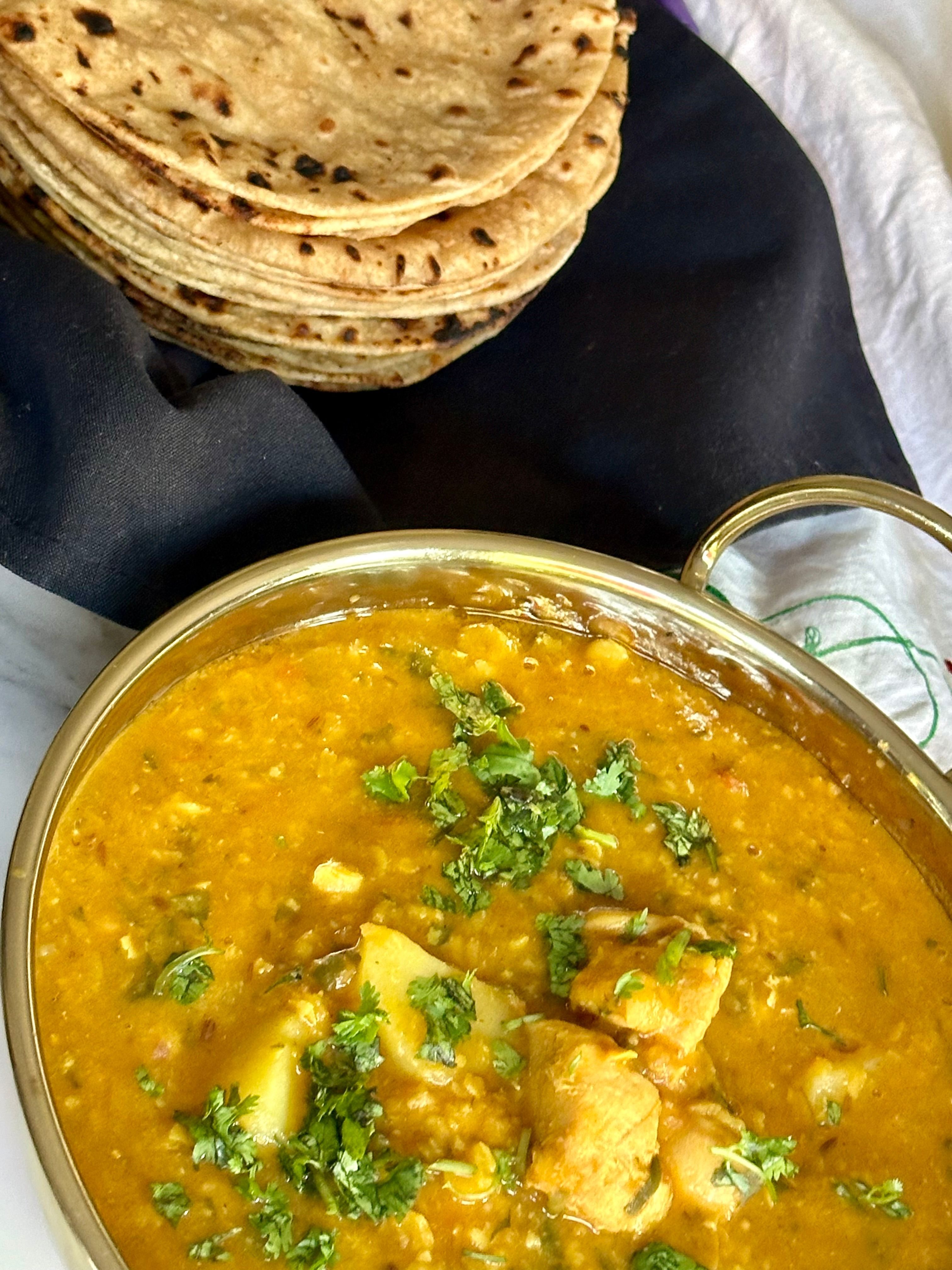
It’s hearty, comforting and perfect for a winter’s day meal! Cooking Gosht wari Daar now feels like a ritual of its own. As the lentils simmer on the stove, cooking down into a velvety texture, and I start making the base, the kitchen transforms into a fragrant haven. The sizzle of onions caramelizing in oil, the spciy warmth of crackling cumin, fenugreek and mustard seeds and then the fresh methi leaves sizzle, releasing warm, slightly smoky undertones, the garlic, ginger, and green chilies adding a kick, turmeric lending a golden earthiness, and Finally, as the tomatoes and spices meld into the base, lemon juice, cilantro and garam masala are added, tying it all together with their layered warmth and the air becomes heady with the unmistakable scent of comfort
As the aroma wafts through the entire house, seeping into every corner, pulling everyone toward the kitchen like an invisible thread. It’s the kind of scent that makes your stomach rumble and your heart feel at home, even before the first bite, and I’m reminded of the warmth of community, the power of tradition, and the way food tells stories that words cannot.
Do you have a dish that takes you back to a special moment in your life? Perhaps one tied to a celebration, a family tradition, meaningful time?
Share your memories in the comments or tag me on IG @spicymemsahib—I would love to hear about them!
For meat, you have a choice of using Lamb, goat, mutton, beef, or even chicken ( which is what I use)
Watch this short to see how I make it!
Cooking the Lentils:
- 1 cup of mixed Dals: Toovar dal (split pigeon peas) Chana Dal (yellow split chickpeas), and husked Masoor dal (Split Red lentils) washed and soaked for at least 30 minutes before cooking (discard soaking water before cooking).
- ¼ tsp turmeric powder
- ½ teaspoon salt
- 2 cups water
- Add all the above in Instant Pot. Secure the lid and set the Pressure Release to SEALING.
- Select the Pressure Cook setting High Pressure or Multi Grain Function for 12 minutes.
- NPR or naturally release pressure once done.
Cooking the Chicken:
- 1 pound chicken breast cubes or more if you like more meat (Meat of your choice beef, mutton, lamb * bone in chicken or red meat gives the best taste)
- ¼ tsp turmeric powder
- ½ teaspoon garlic paste
- ½ teaspoon ginger paste
- ½ teaspoon tabs green chili paste
- 1 teaspoon salt
- 1 ½ cups water
- All above in Instant Pot pressure setting high for 8 minutes for chicken (25 minutes for red meat)
- Once the meat is cooked, let the Instant Pot naturally release pressure
Preparing the Base
- ¼ cup olive oil or about 3 -4 tablespoons
- 5 whole cloves
- 1 -2-inch cinnamon stick
- 4 black whole peppercorns
- 1 teaspoon methi/fenugreek seeds
- ½ teaspoon rai/mustard seeds
- 1 large onion finely diced or thinly sliced
- 1 teaspoon ginger paste
- 1 teaspoon garlic paste
- 2-3 Thai hot green chilies, crushed
- 1 heaped cup fresh methi/fenugreek leaves (you can alternatively use 2-3 tablespoons frozen methi)
- 1 medium tomato blended
- ½ cup canned tomato/passata
- 1 teaspoon turmeric powder
- 1 teaspoon cumin coriander powder/dhana -jeera
- 1 teaspoon Pink Himalayan salt or to taste
- 2 medium potatoes, peeled and cut into about 1 ½ ″ cubes
- 1/2 lemon juiced
- 1/2 teaspoon garam masala
- Finely chopped cilantro
Instructions
- In a heavy-bottomed heat the oil.
- Add cloves, cinnamon stick, peppercorns followed by cumin, and methi seeds.
- Add the diced onions and fry them stirring till they are golden brown, about 8 minutes (you can add a pinch of salt to aid the browning).
- Add the garlic, ginger and green chilli pastes and then add methi leaves and fry for 1 minute.
- Add diced tomatoes, coriander & cumin powders, turmeric, red chilli, and salt and let it cook for about 5 minutes.
- Deglaze the pan with 2 tablespoons of meat stock or water.
- Add the potatoes and cook for 2-3 minutes.
- Add the cooked meat, and the cooked dals stir and add any leftover meat stock or dal stock and cook for 8 – 10 minutes or until the potatoes are completely tender.
- Add the lemon juice and garam masala.
- Taste and adjust salt if needed.
- Garnish with cilantro before serving.
Instant Pot Method:
- Put the pot on Sauté mode and add oil and heat.
- Add the whole spices, and once they bloom add the onions and cook, stirring occasionally until they start to turn golden brown.
- Add in your ginger, garlic, green chili pastes, and then the methi leaves, sauté for 1 minute.
- Add the tomatoes, turmeric, red chiili, and cumin-coriander powders, and sauté for a minute or so until the tomatoes break down
- Stir in your meat and daals and potatoes.
- Add 2 ¼ cups water and set to pressure on Manual Mode or STEW for 20 minutes and when done letting it release naturally.
- Add garam masala, lemon and cilantro.
Make it meatless!
You can swap out the meat and add pan fried paneer cubes, or quartered baby eggplants, zucchini, green beans, peas, cauliflower florets, or any hardy root vegetable. I don’t think you can go wrong with this recipe, it’s perfect for packing any vegetable of your choice.
Notes:
I used 3 cups of water for this recipe. Water and cooking time will be different depending upon the meat of your choice and the cooking method. where possible use up all the meat stock and the lentil stock before adding water to thin out the daar.

 Nadia's Meza recipes
Leave a comment