
Vegan and Gluten-Free Adaptable
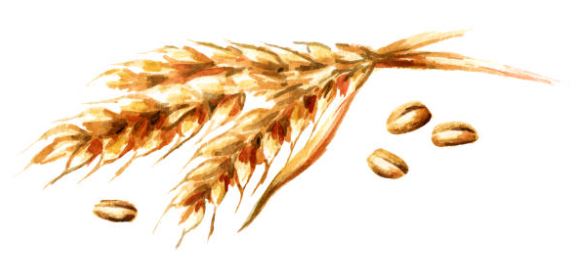
If you are from East Africa, especially the Coast of Kenya, then chances are you know this dish! Khitchdo/Khichdo/Khichro/Khichda is a simple, homey, a rib-sticker meat-and-wheat stew cooked with an aromatic spicey base. The main ingredients are wheat, lentils meat, and time, yes time, as it takes a whole day and lots of muscle to pound the meat, and wheat into a glutinous porridge which is why this dish throughout India, Pakistan, and Eastern Mediterranean is reserved for celebratory events, weddings in particular. Think of it like the American Cream of Wheat but with a bigger, bolder, spicy personality. Just like the popular Biryani, haleem is a celebratory, stand-alone meal that is often served on special occasions, but my MaaIl was not one for following norms and certainly did not need an excuse to make this, you could walk into her house any weekend and see this rib-sticking Khichdo on the stove. She also never made a small batch of Khichdo, it was always a huge pot, family, neighbors, and friends all got containers of the hearty stew.
A Stew With Many Names
So, is Khichdo like Haleem? Well almost…Haleem is cooked until the meat blends with the lentils, while Khichdo usually has some pieces of meat with whole wheatberries. The dish has deep roots in the Arab world where it originated from a dish called harissa and then spread to South Asia through colonization. The Arabic word halim/haleem means gentle, forbearing, patient, and slow to anger, yet this dish is furiously pounded to activate the gluten. Have you ever heard of a dish so aptly named?
There are dozens of variations of this wheat, meat, and lentil porridge prepared throughout Asia, and India to North-Eastern Anatolia and the Mediterranean. The Armenians have a similar dish called Harissa (not to be confused with the Moroccan condiment of the same name). Around the coastal area of Kenya, there is a similar dish called Boko Boko more commonly known by its Arabic name, Jareesh/Harees(“harees” grain is wheatberries), served drizzled with ghee or butter and sugar.
My MaaIL’s recipe called for a “tin” measurement which is an evaporated milk can. Measuring that with wheat 1 tin = 1 cup and 3 tablespoons or 1/4 cup of wheat. Her recipe called for 2 ½ tins of wheat: 1 ½ Kgs. of meat: ½ cup of lentils. I am using slightly less than what hers called for to suit our family of four plus a little more for friends and maybe a little bit more for the freezer as a gift to my future self.
Cooking Khichdo requires a day or two of forethought. First, whole wheat grains need to be soaked at least 24 hours in advance, the right type of meat cut bought early in the morning from the Soko Kuu or local big market, where carcasses and impressively large hunks of meat hung on S-Hooks and the earlier you got there the fresher the meat. Then sorting through the bouquets of fresh cilantro harvested that morning, before purchasing the onions and ripe tomatoes by the bucket. My MaaIL added her hand pound daily “Lilo Masalo” made of ginger, garlic, fresh green chilies, and cilantro which was ground into a beautiful thick paste as a base to almost all her meat dishes.
The Khichdo is only as good as its foundation, the Khichdo/Kichro that my MaaIL made was cooked on a low flame for 15 hours or so. Just before the evening prayers, she would set the wheat that was soaked the night before to cook overnight. Throughout the night she and her helper woke up every two hours, on the hour to stir, add more water stir, and check as the wheat slowly cooked and bloomed, then sometime during the morning hours, meat was added along with the lentils, herbs, and spices all while continuously stirred. Finally, when the meat fell off the bone, it went in the meat grinder for a final measure to make sure the wheat berries were mushed and some left whole, but if you thought that was the end of the process, let me tell you when my MaaIL pulled out the Ghotni (a wooden churner, hand masher thing) you had to be prepared to use some elbow grease and your biceps were in for a workout, what would follow would be a furious pounding and whipping of the mixture until it reached a sticky-smooth consistency.

Then she would set about making the base, a korma of sorts, which would later that morning be mixed with the wheat and lentil stew, and then the pot sat on the stove simmering until lunchtime, which on the weekends was somewhere around 2:00 and 3:00 PM. So, let’s assume the wheat was soaked Friday night, was set to cook Saturday night into the early hours of Sunday morning, and then mixed with the spicy base at 10:00 AM and left to simmer until the base and wheat stew had melded together, there is your 15-20 hours it takes to make this traditionally.
While the wheat stew was simmering, she would make this insanely delectable red chutney – “lal chatni”– there is lots of hand-pounded garlic, green chilies, and cilantro cooked with tomatoes, and served with the Khichdo.

As it is with all such heirloom and traditional foods for the longest time when we moved to the US, I would follow the same method and, then about 18 years ago I discovered the joy of cooking in a slow cooker, which meant no more waking every hour to stir the pot and, I slept like a baby knowing that the wheat was cooking for 10 hours without panicking that I would set the apartment on fire!
I remember telling my MaaIL over the phone about the slower cooker, and her amazement that nothing had burnt, that the wheat was cooked tender, she would jokingly say “aavi tho kamal ni chij amerika maaj hoi” loosely translated- only in America! I wish I could now tell her about my love affair with the Instant Pot, she would find it unbelievable that wheat could cook in 45 minutes or under.
Like most of my recipes, I like to break the process down and make it practical, in the hopes that my kids will be inspired to cook. The passing down of these ancestral recipes has tied daughters to their mothers and grandmothers for centuries. The ingredients thankfully have been preserved for posterity — just like Stonehenge.
I’m using my Instant Pot to make this an easy, mostly hands-off affair, but you could easily use a traditional pressure cooker or even a slow cooker. You will be glad to know that you do not need a Ghotni to grind this stew, I use the immersion blender to gently blitz up some of the wheat berries. If you’ve never made this before or ever found Khichdo/haleem intimidating, roll up your sleeves because this recipe is for you!
Instead of hours slaving over the stove with the heat on low, this Khichdo recipe requires just 2 hours, including prep time, and the end goal is to prepare what is considered a laborious meal in minimal time and the most delicious and luxurious Khichdo ever! Although, I must admit, it tastes better the next day as all good things tend to do. It is traditionally made with beef; I make it with Chicken (my beef and lamb issue and all), but to be honest most times I leave out the meat altogether and make it vegan, and we don’t even notice that it is vegan.
The Gujarati’s have a similar dish called Thikho Khichdo, a winter dish which is usually served around Uttrayan or Makar Sankarnti the Kite festival, using husked wheat called charela ghau, and taking from that concept I am using husked wheat to speed up the process without the bicep workout.
Please Note: If you are using the Instant Pot, you can set everything to cook at once, but if you are using a traditional pressure cooker with the stovetop, make sure you cook the wheat and meat separately and then add it to the base curry. They both cook at different times, and you may end up with mushy grains and meat.
Also, don’t let my long list of instructions stop you from making this- it’s a three-step process: Cook the wheat and lentils, cook the meat, make the base, mix everything together, and let it slow cook! it really is that simple.
I have listed three methods to make this:
- under 2 hours in the Instant Pot,
- about 4 hours on the stove top, and
- 6-8 hours in a slow cooker.
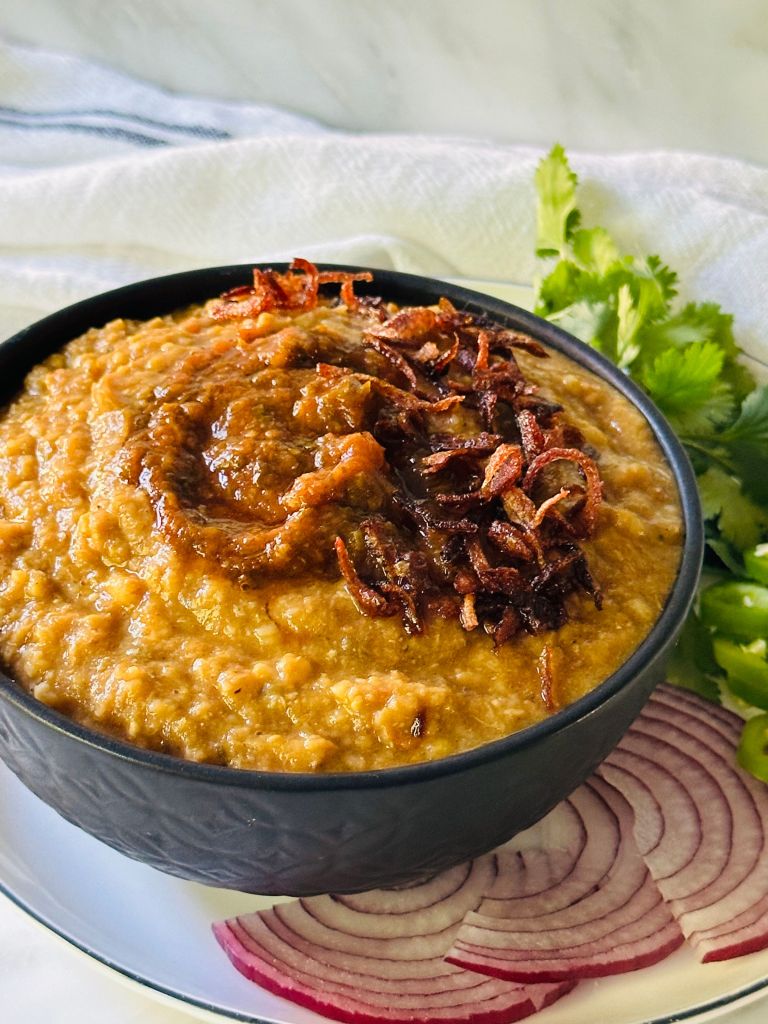
Ingredients:
The wheat and lentils:
- 2 cups hulled wheat
- ½ cup pearl barley or Italian Farro
- ½ cup Oats (if using oats then leave out 0.5 cups of wheat)
- 1 inch cinnamon stick
- 4 black whole peppercorns
- 4 whole cloves
- 1 tablespoon ginger paste
- 1 tablespoon garlic paste
- 1 tablespoon hot Thai green chili paste
1 tablespoon each of the following to make a total of ½ cup total of mixed lentils:
- Yellow Moong dal (Mung bean dal- hulled and split)
- Pink Masoor dal ( Red lentil dal -hulled and split)
- Tuvar dal (Split pigeon peas dal -hulled and split)
- Channa dal (split chickpea lentils -hulled and split)
- Urad dal (Black gram – hulled and split )
- Basmati Rice
The meat:
- 1 kg or 2 lbs. of Chicken breast, beef, or lamb (I use chicken- but leave this out to make it Vegan)
- 1 medium onion, chopped into cubes
- 1 large tomato, chopped into cubes
- 1 – inch cinnamon stick
- 4 black whole peppercorns
- 4 whole cloves
- 1 tablespoon ginger paste
- 1 tablespoon garlic paste
- 1 tablespoon hot Thai green chili paste
- 6 tablespoons chopped cilantro
A paste of the above four- ginger, garlic, green Chillies, and cilantro is known as lilo masalo, it is usually hand-pound in a mortar and pestle
The korma base:
- 3/4 cup olive oil
- 2 pcs. 1-inch cinnamon sticks
- 5 whole cloves
- 8 black peppercorns
- 4 green cardamom pods
- 3 large onions
- 2 large tomatoes
- 1 tablespoon ginger paste
- 1 tablespoon garlic paste
- 2 tablespoons hot Thai green chili paste
- 2 teaspoons coriander powder
- 2 teaspoons cumin powder
- ½ teaspoon turmeric powder
- ½ teaspoon red chili powder
- 1 teaspoon salt
- 1 teaspoon Garam masala powder
- ½ bunch chopped cilantro
- Juice of 1 whole lemon
Toppings: Finley chopped cilantro, lemon wedges, fried onions, and julienned ginger.
Step 1: Cooking the Wheat and Lentils:
I am using husked and hulled wheat so there is no overnight soaking required, but if you are using whole wheat grains that are not husked then soak them overnight.

- Add the wheat, pearl barly, oats, lentils to the Instant Pot or a pressure cooker with 4 cups of water, cinnamon, peppercorns, cloves, and cilantro. ( sometimes I add a bit of onion, tomato, ginger, garlic, green chilli pastes- totally optional)
Step 2: Cook the Meat:
Add meat to the Instant Pot or a pan with 2 cups of water, onion, tomato, ginger, garlic, green chilli pastes, cinnamon, peppercorns, cloves, and cilantro.
- Instant Pot: Pressure cook on Manual Mode for 8 minutes for chicken and 15 minutes for red meat.
- Stove Top: boil meat until
Step 3: Preparing the Korma base:
- Heat oil in a heavy bottomed pan, or Turn on the Instant Pot to the Sauté function or High and wait until the display reads HOT.
- Add the oil and the whole spices: cinnamon, cloves, black pepper, and cardamom, and let them bloom.
- Add the sliced onions and brown them until the onions have caramelized (Using a slotted spoon, transfer about 3 tablespoons of onions for garnish to a plate, spreading out into a single layer).
- Add ginger garlic and green chili pastes and sauté for about 30 seconds until fragrant.
- Add the grated or chopped tomatoes and turmeric powder, coriander-cumin powder, red chili powder, and salt, and let it cook until the tomatoes break down completely, stirring frequently, adding a splash of water and scraping the bottom of the pan. (This South Asian process is called Bhuna, the technique that breaks down the cooking process of tomatoes, onions, garlic, and ginger, by repeatedly stirring and scraping, causing the fat to separate from the solids which helps intensify the flavors of the masala that forms the base of the dish).
- Once the base is thick, and, a flavorful sauce is formed through caramelization and deglazing, add the garam masala, cilantro, and lemon juice (it should take about 15 minutes.)
- Add the cooked wheat, meat, and lentil mixture, combine thoroughly, and let it simmer on low heat until ready to serve.
Instant Pot Method:
If you are using the Instant Pot then there is no need to cook the wheat, lentils, and meat separately, you can cook the entire Khicdo in the same pot. As an Instant Pot-Pressue cooker- slow cooker devotee let me tell you, these cookers don’t heat up your kitchen and are therefore brilliant for summer.
- Combine dals, rice, and barley/farro in a bowl. Wash the dals and grains, drain, and repeat the process until the water runs clear. If you have time let them soak at room temperature for at least 30 minutes.
- Wash the wheat and let it soak while you prepare the korma base.
- Prepare the korma base, as directed above.
- Add the chicken breast cubes and braise for 3 minutes.
- the washed dals, and wheat grains.
- Add 1 medium chopped onion, 1 medium chopped tomato, 1 teaspoon each of garlic, ginger, chili pastes, cinnamon, cloves, black pepper, and 1 teaspoon of salt. (you can skip this but I feel the wheat and lentils need that extra flavoring)
- Stir well and cover the instant pot. Set to 35 minutes of high pressure or Multigrain and allow a natural release.
- Cooking time will vary with red meat– so add another 15 to 20 minutes depending on the cut of meat you are using.
- Use a potato masher or stand mixer with the paddle attachment on low speed to shred the meat, and as much as possible try to keep the stringy texture or
- Using an immersion blender or a food processor blitz the wheat and lentils- don’t make to too fine, leave some whole wheat berries.
(Per my MaaIL’s original recipe, she ran the mixture through the meat grinder- whole spices and all you can do this in your KitchenAid meat grinder using the medium or coarse grinding plates so that you can get some whole wheat berries.)
7. Adjust salt add lemon juice, garam masala, and cilantro, and stir and add ½ cup boiling water if it is too thick, you are looking for a luscious thick batter -like consistency, not soupy.
8. My MaaiL added a few dollops of the Lal Chutni to make it even more spicy- I suggest you add at least one spoonful.
9. Secure THE lid and select Slow Cook to cook for an additional 20-30 minutes, if you are not serving immediately and have time, then leave it on Slow Cook for a couple of hours.
10. Garnish with fried onions, a wonderful garnish, and almost a necessity, and some chopped cilantro.
Stove top Method:
The stove-top method takes a little longer, the wheat, meat, and lentils have to be cooked separately, you can use the traditional pressure cooker to speed up the process.
- Combine dals, rice, and barley/farro in a bowl. Wash the dals and grains, drain, and repeat the process until the water runs clear. If you have time let them soak at room temperature for at least 30 minutes.
- Wash the wheat and add it to the stovetop traditional pressure cooker with 3 cups of water, cover the lid, slap on the whistle, and give it at least 10 whistles OR
add the wheat to a heavy–bottomed large pan and add 6 cups of water, Bring to a boil over high heat, then remove the foam and lower the heat, Cover, and cook for 1 hour or until the wheat is cooked. - Add the washed dal, grains, and the chicken breast cubes.
- Add 1 medium chopped onion, 1 medium chopped tomato, 1 teaspoon each of garlic, ginger, and chili pastes, and 1 teaspoon of salt.
- Cover and cook this until the meat is fully cooked
Cooking time will vary with red meat– so add another 15 to 20 minutes depending on the cut of meat you are using.
Use a potato masher or stand mixer with the paddle attachment on low speed to shred the meat, and as much as possible try to keep the stringy texture or
Using an immersion blender or a food processor blitz the wheat and lentils- don’t make to too fine, leave some whole wheat berries. - Once the Korma base is thick, and a flavorful sauce is formed add the cooked meat and stir, then add the wheat and lentil mixture (does not matter if you cooked it separately or together).
- Adjust salt add lemon juice, garam masala, and cilantro
- My MaaiL added a few dollops of the Lal Chutni to make it even more spicy- I suggest you add at least one spoonful.
- Bring the stew to a boil, add ½ cup boiling water if needed, and then simmer on low heat for about an hour, frequently stirring and scraping the bottom of the pan every 15–20 minutes, the consistency you are looking for is like a luscious thick batter not soupy.
Slow Cooker:
This is a perfect set- it-and-forget-it slow cooker method, the Khichro can be prepared in the morning and be left to gently cook whilst you are at work or away from the kitchen. This recipe replicates the traditional method my MaaIL used, I recommend that you sauté the korma base in the same pot before adding the wheat, meat, and lentils.
- Prepare the korma base and add it to the slow cooker stock pot, add the meat, wheat, lentils, and chicken breast cubes.
Add 1 medium chopped onion, 1 medium chopped tomato, 1 teaspoon each of garlic, ginger, and chili pastes, and 1 teaspoon of salt. - Add enough water to cover wheat grains and meat and add one cupful more, cover and slow cook for 6 hours, then cook on high for an hour if needed.
- Pulse the meat and wheat then add the prepared korma base, give it a good stir, and slow cook for another 2 hours or until ready to serve.
- Garnish with fried onions, a wonderful garnish, and almost a necessity, and some chopped cilantro.
- Khichdo is best served with a plate of garnishing, usually placed next to the serving bowl, so each person can customize their topping: fried onions, chopped cilantro, ginger juliennes, lemon wedges, and finely sliced jalapenos.
- Serve with naan and the Lal Chutni on the side.
- Khichdo can be prepared 1 day ahead. Let cool; and refrigerate, then reheat over medium heat until warmed through.
Lal Chatni (Red Chutney):
- 4 tablespoons oil
- 2 tablespoons garlic paste
- 3 large tomatoes grated or blended
- 1 teaspoon tomato paste
- Lilo masalo ( ½ teaspoon ginger paste, 1 teaspoon green chili paste, 1 tablespoon of cilantro paste)
- 1 tablespoon hot red chili powder
- ½ bunch chopped cilantro
- Heat oil in a saucepot, add the garlic paste, and the Lilo Masalo (ginger-green chilies- cilantro- garlic mixture)
- Sauté for about 6 minutes.
- Add the tomatoes, tomato paste, salt, and red chili powder.
- Stir cover and cook on low heat for 10 minutes or until the tomatoes are cooked through, then add chopped cilantro.
- Transfer to a serving bowl.
Ginger matchsticks:
- Peel ginger with a vegetable peeler into thin slices.
- Stack slices and cut lengthwise into matchsticks; set aside.
Birista or fried onions:
- Slice a red onion very finely using a mandolin
- Heat 1 cup of oil in a pan
- Once the oil is hot, turn the flame to medium-high.
- Add the onions to the oil, separating the rings or slices, slightly.
- Stir continuously and fry until they are brown. Do not let them turn dark – they will reach a shade darker as they cool.
- Lay them flat on a paper towel.
- Store in an airtight container for several days to weeks in the refrigerator.
Watch me make it here:
Notes:
Can you make it Gluten -Free?
Yes of course I can! Why not? Replace the wheat with Barnyard Millet and organic, pure porridge oats (Although oats themselves do not contain gluten, they are often grown, processed, and transported alongside wheat, barley, and rye, which do.) Millet is gluten-free, rich in minerals, and nutritious.
Can you make this vegan?
Absolutely- I usually make this vegan, with no meat at all, and with spiced wheat, dals, and oats you will not even miss the meat.
Khichdo calls for pelted (also called pearled) wheat, since the absence of the outer layer of bran makes it possible to smoothly puree the cooked grains. I get mine from the Middle Eastern stores, but if all you can find is wheat berries in their whole-grain form, cook them longer (a slow cooker makes this easy).
Storing leftovers:
You can also freeze Khichdo for up to a month, just thaw it in the fridge overnight, reheat it on the stovetop until it is warmed through, and adjust the salt, etc.
Meat:
Traditionally Kichro is made with beef, but you can use lamb or chicken. Make sure to cut the beef into bigger chunks about 2.5-inch cubes for the perfect rashydar /stringy Khichdo.
Whole Spices:
You will notice I have not removed the whole spices from the wheat, meat, or korma when blitzing the mixture, these whole spices when cooked and ground give the Khichdo its unique flavour.
If you have any questions please message me so that i can walk you through the steps and If you try this recipe out, don’t forget to share it with me on Instagram @Spicymemsahib so I can see how it turned out!

 Nadia's Meza recipes
Leave a comment