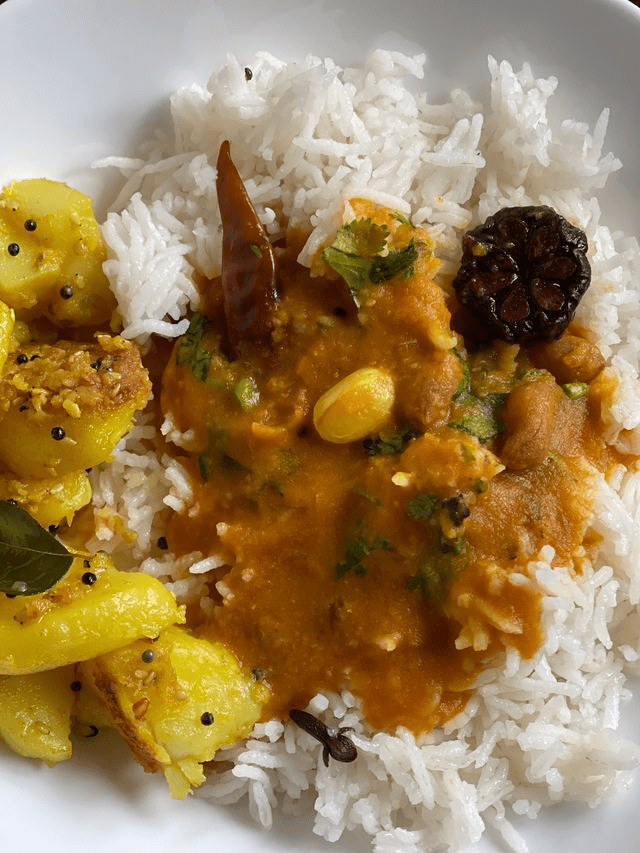
How old were you when you knew DBSR was the was every Gujarati’s answer to “what did you have for lunch today?” or even knew that DBSR stood for Dhar-Bhat-Shaak-Rotli? Gujarati dhar is a staple dish in every Gujarati household. Dal was a big part of my childhood, and as such, it is a big part of my kids as well.
At the first hint of cool temperatures today, I could think of nothing more welcoming for them when they came back from school, then some dhar burbling away on the stove. The aroma is insane. I must have woken up the entire neighborhood at 6am this morning with the pressure cooker, and I can guarantee the aroma of this dhar has reached every home within 2 miles by lunchtime.
The morning pressure cooker whistles back home was the signal that someone had dhar on their menu for the day and the 11:00am aroma of the dal simmering from a Gujarati kitchen is the indicator of how flavorful the dal is going to be!
The slowly simmered and well-boiled dhar develops the flavors and aromas that are essential to the perfect dal. As it is with all everyday foods there is no one particular recipe to Gujarati Dhar, each home makes their own version with peanuts no peanuts, use Kokum or not or substitute with lemon?
Perfecting a Gujarati dhar comes with experience; that has a bit of family history- the washing, drying and splitting of the dhar during summer months, after which grannies would oil the dhar and store them for months if not years, the wisdom of using the right spices and letting it cook to perfection.
A good Gujarati dhar is aromatic, a mix of sweet and sour, bit spicy and extremely soothing and filling. On a cold winter day, it is a warm hug in a mug; at a Gujarati wedding, it is the star of the buffet table, on any normal day its pure nostalgia of Mum’s cooking and love.
I learnt to cook dhar when I was 10 from my grannie, because you know “no one wants to marry a girl who cannot cook dhar bhatt and rotla”! She never followed exact measures but there was this remarkable consistency in flavors, and her secret ingredient was using a squirt of Ketchup! Yes, that’s right Ketchup, I don’t know if that was because British tomatoes were just so bland and tasteless, but I swear the dhar made by her would taste exactly like the lagan ni dhar/wedding dhar.
My mum on the other hand never used ketchup but always added a pinch of dhar masala from India or that she ground at home which was a mix of (star anise, black cardamom, cinnamon, cloves, coriander seeds, jeera, mace, nutmeg, dried ginger and patthar ke phool and some other things I cannot recall).
The recipe I share is much of what my grannie taught me and adding a bit of my Mum’s additions to it, I still use the oily tuvar dhar, somehow the dry version does not taste the same to me.
The longer the dhar simmers the more the flavors develop, do not rush to adjust the seasoning as soon as you are done with the tempering, instead adjust the seasoning after it has cooked fully.
I still serve it exactly the same way my Mum and grannie did, Dhar, bhaat (rice)-Shaak( veg curry)-Rotli, along with a fresh kachumbar, raitu, yoghurt, a pickle, roasted papad and churma na ladwa or kaunsar if I have the time.
Most of the time, I make extra dhar so I can make dhar dhokri the next day.
For pressure cooking lentils
- 2 cup oily tuvar dal (split pigeon pea lentils)
- 3 cup water for boiling dal
- 2 cup water to after blending
- 1 tbsp. jiggery/gur adjust if prefer less/more sweet
- ½ tsp turmeric powder
- 1 tsp. salt
Dhar Tempering:
- 2 tbsp. oil
- 5 whole cloves
- 1 inch cinnamon stick
- ½ tsp cumin seeds ( Mum did not use it but I do)
- ½ tsp fenugreek seeds
- ½ tsp mustard seeds
- 1/2 tsp asafoetida
- 1 cup tomatoes blended
- ¼ cup tomato ketchup or about 3 squirts
- ¼ to ½ tsp red chili powder
- ½ tsp turmeric powder
- 1 tsp dhana-jeeru (coriander cumin powder)
- 3 tsp salt or to taste
- 1pc. kokum soaked (or use 1/2 lemon juiced)
- 1 -2 dry red kashmiri chilis
- ½ tsp dal masala ( mum used a dal masala from India)
- 1 inch piece ginger grated (Mum did not use ginger I do)
- 1/2 cup whole raw peanuts (with or without skin)
- small bunch fresh cilantro chopped
Instructions
- Pressure cooking and preparing the lentils
- Rinse lentils until water runs clear, and soak tuvar dal in warm water for 30 minutes or more.
- Add soaked lentils with the jaggery to pressure cooker/Instant Pot and 3 cups water and pressure cook for 6 whistles- 5-6 minutes, the lentils should be mushy and soft, add the remaining water and either blend or hand whisk the dhar and strain.
- Heat oil in a pot saucepan or a deep pot; add cloves and cinnamon, and as they pop, add cumin, mustard, and fenugreek seeds and red Kashmiri chilies followed by asafetida.
- Add the blended tomatoes and tomato ketchup, turmeric, salt, red chili powder, Kokum, ginger, peanuts, and dhana-jeeru, give everything a good stir, and cook for 3-4 minutes.
- Add the strained lentil liquid carefully to this tempered mixture, and (dal masala if using)
- Let the dal/ dhar simmer for 20 minutes, taste to check seasoning, and adjust if necessary leave it simmering on a low heat, as the flavors continue to deepen. Just make sure to add water a cup at a time if it’s too thick.
- Garnish with fresh chopped cilantro before serving.
What is Tuvar Dal?
Scientifically known as Cajanus Cajan ~ Pigeon Pea, tuvar, toor, tur, arhar, or Mbaazi in Swahili is a split legume, and the most common one used from North to South of India, and is also one of the most popular source of protein in a mostly vegetarian diet.
It grows widely in tropical and semitropical regions around the world, fresh young pods are eaten as a vegetable. You will see me refer it to Lili tuvar ni dar. These green peas are often found in the frozen section in your local Asian store or sometimes also come in a tinned variety.
The most popular dishes in my family, using tuvar dal is Dar Dhokri, chutti tuvar dar ni kichdi, or gari rotli/puran poli. Mum also used it in her Ondhwo/handwo mixture.

 Nadia's Meza recipes
Leave a comment