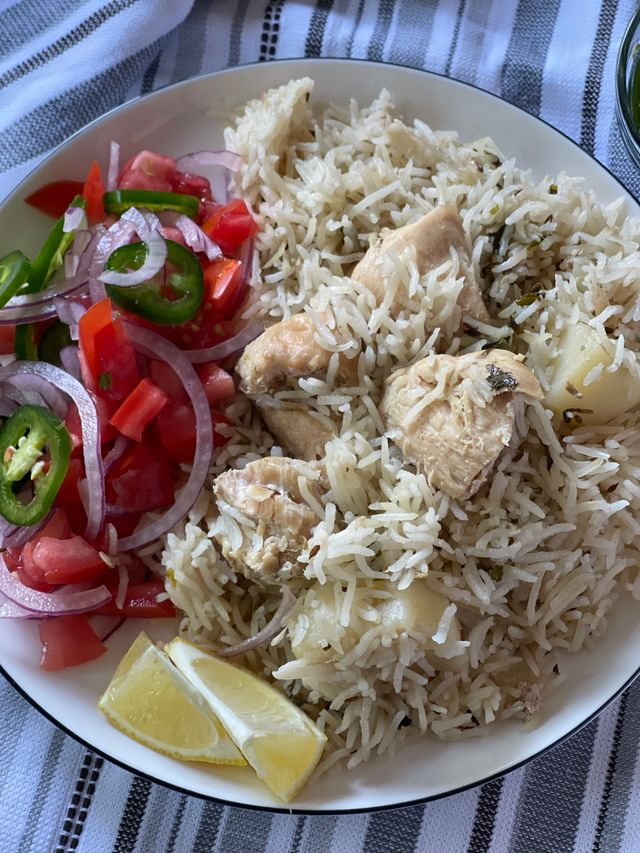
When it comes to African cuisine, pilau is East Africa’s ubiquitous rice dish and it often extends beyond its coastline from Zanzibar into the Indian Ocean islands of Madagascar, Mauritius, Comoros, and Seychelles tracing all the way to its Indian origins and from there to it’s birthplace in ancient Persia which bordered ancient India.
The concept of cooking rice with meat arrived to the Swahili coast as early as 1450 B.C. by Arab and Persian traders. Each culture has their own name for it,” Akni” “Polow,” “Pulao”, “Palov,” “Pilau,” or “Pilaf” are many that I have heard, whatever you call it, you know it’s going to be fragrant, aromatic rice with tender beef, lamb, chicken or venison.
Tanzanian pilau uses five distinct spices that are grown in the coastal regions to make the pilau masala: whole black peppercorns, whole cloves, cardamom, cinnamon and cumin.
A proper pilau should have a beige color, not brown like the Afghani/Iranian pilau, nor red like the West African Jollof (although my MaaIl did make a“red pilau” or Lal Pilau/Masala Pilau using tomatoes).
The pilau is cooked with ghee (samli) and served with a side of kachumbari – a lemony, tomato, onion green chili salad. I learnt to cook this from my MaaIL, she always boiled the meat first, and then cooked the rice and meat again with the strained the broth. Sometimes she would just add the rice to the broth without straining it- it all depended on the day she was having and what she was in the mood for!
She used to purposely cook the bottom layer to a crispy crust called “ukhaida” just for me, it‘s similar to the Persian “thadig” and so so good! we would scrap off the bottom and just sit there chewing on golden, crispy rice layers.
As it was then, it is now, like the corner ends of a pan of brownies or the crunchy edges of a baked lasagna, the crusty rice layer on the bottom of the pot, is pure gold for me!
The dish is gluten free and easily adaptable to make it vegetarian or vegan.
Ingredients:
- 2 cups Basmati rice washed and rinsed to remove excess starch
- 1 tablespoon oil
- 2 teaspoon ghee
- 3 cardamom pods
- 8 whole black pepper
- 1.5 sticks cinnamon (1” or more)
- 6 whole cloves
- 1 teaspoon whole cumin seeds
- 2 medium onions sliced thinly
- 2 hot Thai chili or serrano peppers slit to the core
- 3 medium potatoes (peeled and cut into 1 or 1.5 inch cubes)
- 4 -6 cups water/ stock from cooked meat
- 1 kg whole chicken cut into 8 pieces/or lamb/beef (recommend using chicken breast with bone-in or chicken with bone)
- 2 tablespoons plain yoghurt (optional)
- 1 tablespoon ginger paste
- 1.5 tablespoons garlic paste
- 2.5 teaspoon salt or to taste
- ½ cup chopped cilantro leaves
Instructions:
- Boil the chicken or meat with 4 cups water, with 1 tsp. ginger, ½ tsp. garlic pastes, 2 cloves, 2-3 peppercorns, 1/5 tsp. salt, ½ stick cinnamon (and yoghurt if using), then reserve 4 cups of broth/stock.
- Melt and heat the oil and ghee in a large heavy based pan that has a tight-fitting lid on medium heat, add the remaining whole spices, and once they pop, add cumin seeds, add the sliced onions and sauté until translucent ( not brown!), add the remaining garlic and hot peppers and potatoes pieces and fry for 3-4 minutes.
- The ghee and roasting spices aroma is what this is all about!
- Add the cooked chicken/meat, stir, then add in the rice and the 4 cups of stock, and cilantro, then and bring it to a boil, add salt to taste.
- Reduce heat to a medium-low flame and partially cover the pan with a lid, about 15 more minutes or until broth has completely dried up at this point your rice is probably not cooked all the way, either turn the heat to the lowest setting or turn the heat off, cover the lid and let the rice steam for another 10 mins.
Give the rice a fluff up with a fork and serve with kachumbar and some raita or plain yogurt.
Instant Pot® Pilau
- Wash and soak the basmati rice in cold tap water for 15 minutes. Drain, rinse and set aside.
- Heat the Instant Pot on sauté mode. Add the oil/ghee to the inner pot.
- To the hot oil , add the whole spices and once they bloom add the onions.
- Sauté for 5-6 minutes or until the onions are translucent.
- Add the garlic, ginger, and green chili paste, sauté to remove the rawness, then add the chicken and spices ( except rice, potatoes and cilantro). If you are using beef or lamb increase the cooking time to 30 mins or until the meat is tender.
- Sauté for 5 minutes or until the chicken turns opaque.
- Add the water and close the lid with vent in sealing position and Manual Pressure cook for 6 minutes.
- Open the lid after 6 minutes on QPR
- Drain the rice and add to the broth, along with potatoes, and cilantro- adjust the salt for rice and potatoes.
- Add a bit of water if you do not have enough broth- but you should have plenty (meat with bones release water). The general ratio for cooking rice is 2:1, but reduce the water it slightly here because the steam cooks the rice.
- Secure the lid, close the pressure valve and use the RICE mode to cook the rice and potatoes for the preset 12 minutes.
- Naturally release pressure- NPR for 10 minutes.
- Open the lid and fluff before serving.
- Serve with kachumber and a yoghurt raita.
Is this the same as Yakhni or Akhni Pilau?
- Yakhni just means broth or stock. So the way I learnt it from my MaaIL was that Yakhni Pilau is made by first cooking the bone-in meat to create a broth, which is then used to cook the rice. After the chicken is cooked the rich broth is strained and the whole cloves, cinnamon, black pepper, cardamom and other spices tare discarded. Onions are sautéed with a fresh batch of dry spices and the clear strained broth is then used to cook the rice and the chicken.
- Most times the Yakhni or the broth is used as a soup during winter months, its almost like an indian bone broth.
- My MaaIL also added a tomato to the yakhni which when cooked with rice would result in a yellowish pilau.
- In the East African version of the pilau, we don’t remove any of the whole spices after the meat cooks, everything is added to the pan with the rice to make the pilau. It is also pale in color, almost white if you will or a light beige if the onions brown a bit longer.
Meat:
This is a chicken pilau recipe. You can make this with lamb or beef. I would recommend using meat with bone- in, it gives a richer and more flavorful broth. Ideally if you family eats all parts of a chicken this would be a perfect dish to cook with legs, thighs and breast pieces. Mine only prefer chicken breasts so the meat in pilau tends to be a little dry and hence I have to leave a little moisture in the rice.
Can this be made Vegan or Vegetarian?
Absolutely! Replaced with vegetables like carrots, cauliflower, string beans, peas, potatoes, any vegetable that will hold it’s shape and not get mushy.
Replace the Ghee with oil or vegan butter.
Storing and Reheating Pilau
You can store chicken pilau in an airtight container in the fridge for 2 days and reheat in a microwave or on the stovetop using a steaming device.
Got leftovers?
Make my Maail’s Piri Rotli for breakfast!

 Nadia's Meza recipes
Leave a comment