
A traditional Sunday bake, made with bottle gourd, onions, fresh fenugreek leaves, spices and a tempering of sesame and mustard seeds. There is no right per wrong way to make this; each household has a different version of this delicious baked cake. Whether you call it Ondhwo or Handwo it’s the same thing! It’s the only Gujarati bake most of us know!
The preparations to make the Hondwo begins a day before, with soaking the dals and rice for a couple of hours, grinding them to a smooth batter and allowing the batter to ferment.
I remember when I was growing up the Ondhwo and Dhokra flour making process was done during the summer months, washed rice and dals were spread old cotton “sadlas” or cotton sarees laid on the terrace floor and held down at the corners by heavy bricks.
The kids (there were only two of us!) were tasked with chasing the pigeons off as they tried to feast on the grains. After the drying for a couple of days, the flour was milled by hand using a “Chakki” or “ganthi” or or what is commonly known as a Roman grinding stone. Did you know that the everyday Chakki was a hand mill used by Roman legionaries to grind grains for each soldier who his own ration of wheat to be ground into flour?
Grannies and Mum would bake the ondhwo in a “tapeli/ patliee” or copper pan that is designed for Hondwo (it is one of the pans I have that is 3 generations old!) over a coal fire or jiko/ sigri with more hot coals on the lid creating a homemade oven as such.
The elders of the house would have it mushed up with warm milk, whilst the kids would fight over the crusty top and bottom known as “Hondwo nu pad” (the crust of the ondhwo) then slather on the lasan nu marchu (garlic chutney), hot sauce, ketchup or mango pickle.
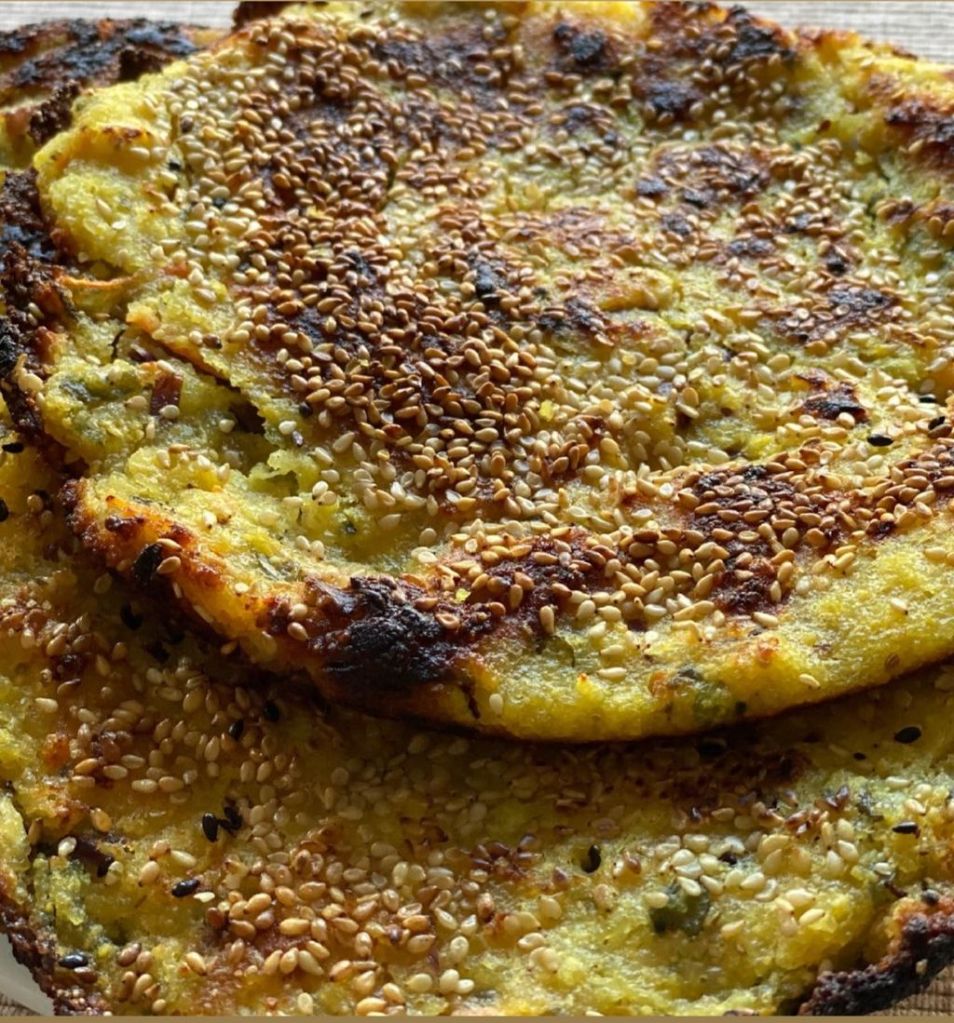
There was nothing I loved more than the ondhwo itself, and that’s when Mum would make me “Dangella”. She would save some batter from the ondhwo and make these pan-fried pancakes, crunchy and crispy on both sides, with that incredibly moist middle, it’s like heaven, the best of both worlds, and these were my most requested dinners from her.
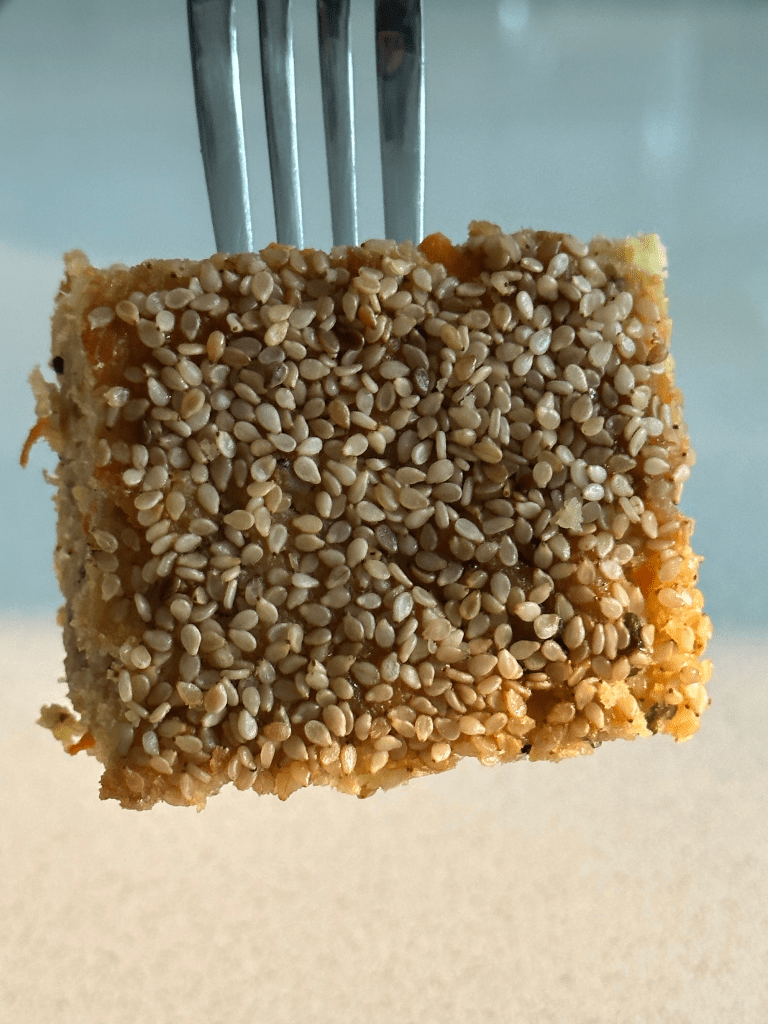
With time I learnt to make it from my mum, baking this in the oven until the top is crispy and crunchy and the inside is moist and soft. You can use the basmati rice, chana dal, and tuvar dal to make your or batter or just buy the premixed flour from your Indian store.
Can you add other veggies?
Yes! I add all sorts of veggies to clean the fridge, cabbage, carrots, peas, you do whatever you want, girl. Whatever. You. Want. I like baking it in a muffin tray or as cupcakes for parties for hors d’oeuvres, appetizers, starters or to give to friends, but always saving some of the batter to make a few Dangella’s for my kids just like mum used to do for me.
Mum only used bottle gourd, methi leaves and onions, and I am sharing her recipe as taught.
*You can get this brand of Ondwa flour at your local Indian store or online if it’s much easier.
Ingredients:
- 1/4 cup whole-wheat flour* (replace with cornmeal for a GF version)
300g Hondwo/Ondhwo flour (My Mums recipe calls for soaking 200gms rice or Kanki, 100g chana dal, 100g Tuvar dal overnight and grinding it the next day).- 1 /2-cup semolina (I added it to the store-bought flour, but my Mum’s recipe does not call for it replace with cornmeal for a GF version)
- 1 cup sour yogurt **(or add some lemon juice or citric acid/Limbu na phool)
- ½ cup water (you may need 3/4 cup depending on your flours)
- 1/2 tsp. methi dana/Fenugreek seeds
- 1/4 tsp. ajwain seeds/ Carom seeds1 medium about 2 cups dudhi grated/ bottle gourd1 large onion finely chopped2 tbsp. of crushed ginger, garlic and green chili paste or to taste.
- 1.5 cups chopped fresh methi /Fenugreek leaves.
- 1 tbsp. of white sugar (or more if you like it sweet)
- 2 tbsp of Pink Himalayan salt or to taste
- 1/2 tsp. of turmeric powder
- 1/4 tsp bicarbonate of soda/Soda bi carb
- *Replace wheat flour with cornmeal
- ** replace yoghurt with vegan yoghurt
Tempering:
- 1/3 cup neutral oil
- 1/2 tsp. Asafetida/hing (leave out for GF version or buy the pure hing)
- 2 tsp. mustard seeds
- 1/2 ajwain seeds/ carom seeds
- 1/4 tsp fenugreek/methi seeds
Garnish before Baking:
- 1/3 cup sesame seeds
- 1/4 cup oil
Method:
- Wash and soak the rice and dals for at least 5-8 hours.
- Using 1/2 of water grind the soaked rice and dal into a smooth batter, then transfer the batter to a glass bowl with lid (if using store bought flour skip to step 3)
- Add 1/4 tsp carom seeds, sour yogurt, turmeric, sugar, salt and fenugreek seeds to the flour/batter.
- Stir well. Cover and allow the batter to ferment overnight or for 7-8 hours.
- Next day add grated bottle gourd/dudhi, finely diced onions, chopped methi leaves, garlic, ginger and green chili pastes, wheat flour and the soda-bi carb and you should see a slight froth. (You can add shredded cabbage, grated carrots, and peas as well) the mixture should resemble pourable cement or like sludge not solid if it’s stiff add a tablespoon of water to loosen it.
- Preheat the oven to 400° F.
- Heat oil in a small pan; add asafetida and mustard seeds once they crackle add to the above mixture.
- Give it a good stir, adjust salt, and pour in into a greased baking tray (not glass) /cake tin or if using cast iron skillet heat it on stove top then transfer to oven.
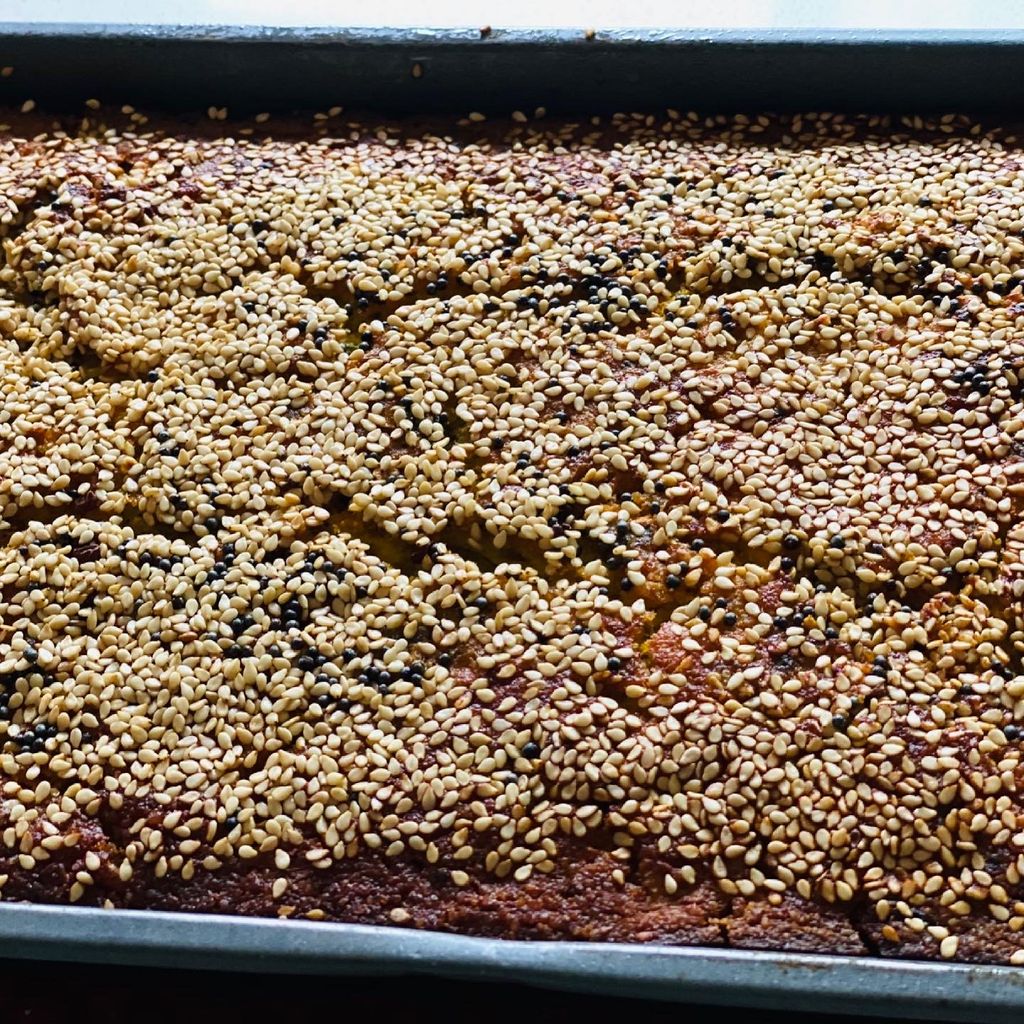
- Sprinkle the top liberally with sesame seeds; it should be totally covering the surface.
- Bake for 15 minutes at 400° degrees, then lower the heat to 350° and bake for another 25 minutes, at this point spoon over some oil to crisp the top, cooking time varies by oven.
- Check if it is done, insert a knife or skewer into the ondhwo, if it comes out clean, it is done, if you see wetness on the knife, let it cook a little more.
- I recommend using a cast iron skillet for best results, it crisps the bottom of the ondhwo, just like the way it used to when Mum baked using a Hondwo patliee.
- Heat the skillet with and grease it well with about 1 tbsp. of oil, pour the mixture and let it cook on the stove top for about a minute, then transfer to the oven.
- Also do not adjust the oil quantity mentioned, this is what gives it that crisp crust and bottom that we fight for whilst keeping the inside moist.
You can use a Bundt pan or mini muffin tray to make individual little ondhwo’s.
Bonus Recipe:
How to make Dangella or Thin Tawa/Pan Ondhwo
Gujarati Dangella/Tawa Ondhwo is thick pan-fried pancake that is made with fermented Hondwo batter, instead of baking it.
- Hondwo batter- just before you are ready to make it activate it with the soda bi carb or 1/2 tsp. of Eno fruit salt per disc or dangella.
- Heat a tawa or a frying pan with an edge
- pour about 1 tsp. oil in the pan and when it heats
- Pour about 1/2 cup of Hondwo batter and spread it to disc.
- Sprinkle about 1/2 tsp. or so of sesame seeds over the top of the batter.
- Then drizzle about 1 tsp. of oil around the disc or dangella.
- Cover the pan with the lid and let the dangella to cook for 5-6 minutes over low heat.
- after 6 mins, flip it over to and let the topside cook.
- Drizzle 1 tsp oil around the dangella again and cook for 5 minutes or so.
- Repeat the above steps with the remaining batter.
- Serve with Chai and a pickle.

 Nadia's Meza recipes
Leave a comment