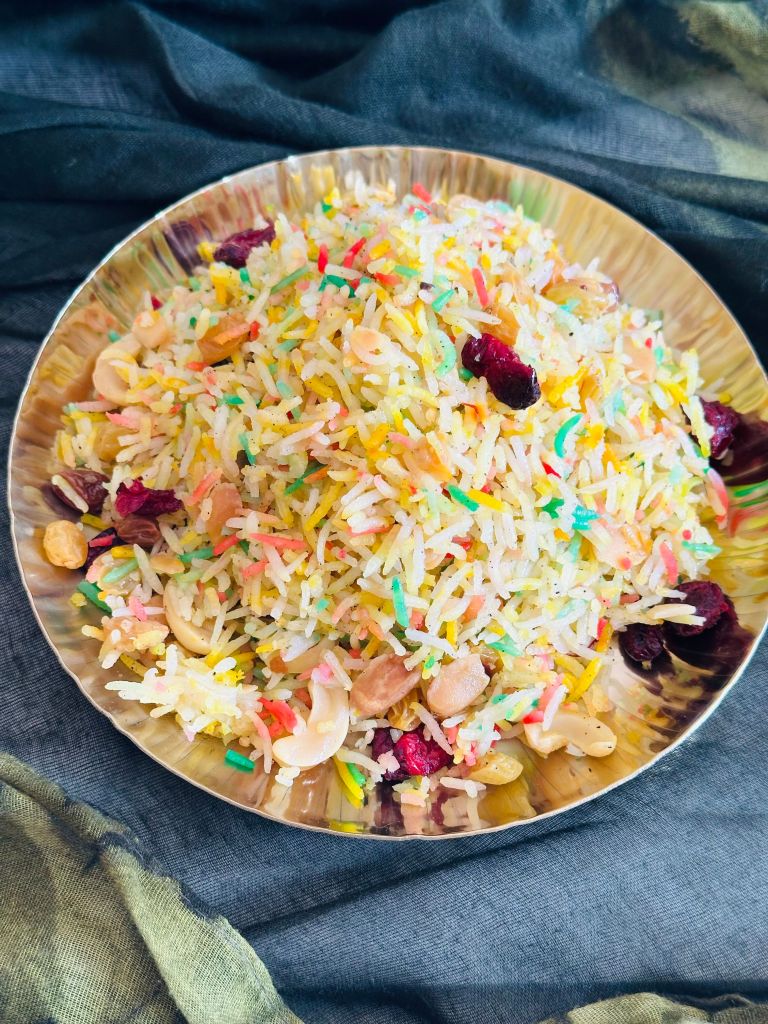
We call it Jardo, but whatever you call it be it Zarda, Zarda Pulao, Meethe Chawal/Bhaat or Aromatic Sweet Rice with Nuts & Raisins, this legendary iconic dish is the other star at every celebration.
The fragrant rice cooked in ghee and aromatics like cardamom, cinnamon, lightly scented with rosewater and saffron tinged with a regal yellow (Zard in Persian and Urdu literally means yellow) hence its presence in celebratory occasions.
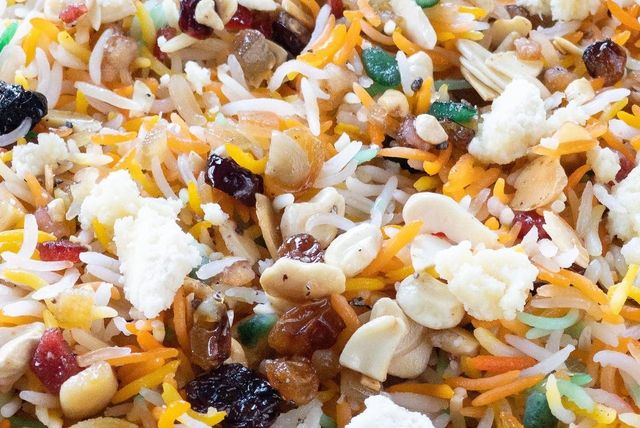
It is sweetened with sugar, raisins and tutti frutti and topped with mawa and toasted nuts, coconut and more dried fruits, silver warak (edible silver leaf) and rose petals. If this isn’t a party in your mouth, I don’t know what is.
Whether it’s an engagement/wedding ceremony, Eid, Godh Bharai, RakshaBandhan, or Diwali, this sweet dessert like rice is a staple in the North Indian dastarkhwan and a perfect end to a delicious meal. As it was at my in-laws , at our house, Jardo is always served with black urad ni dal (split Black Gram) a pairing that’s become tradition.
The way I have seen my MaaIL make it involves adding sugar to the rice whilst cooking; however, I found that my rice was either undercooked or over mushy because the sugar water would interfere with the cooking of the rice. Then I learnt the method where a sugar syrup /‘chashni’ is poured over cooked rice, but that came with its own challenge: getting it just right without the rice clumping.
And then I discovered this uncomplicated, foolproof method of layering the cooked rice with sugar and letting it steam (the sugar that melts over the rice giving it the sweetness without turning the rice to a mush). The results are the same as my MaaIL’s Jardo, full of flavor, rich in nostalgia, and perfectly textured!
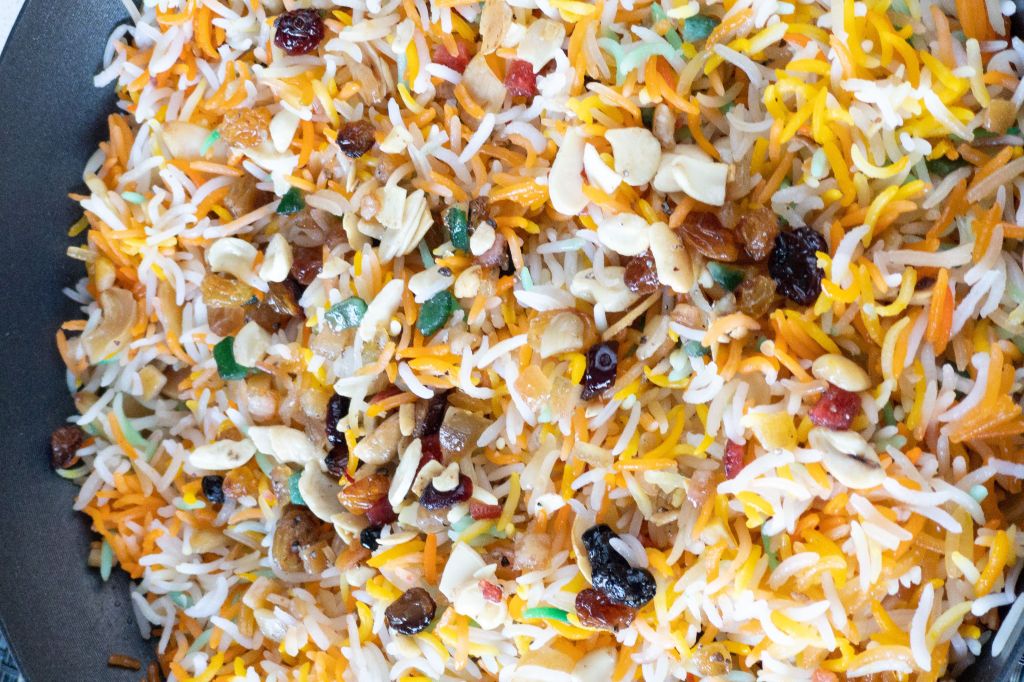
Living in a community where the multi-colored version, Rainbow Zarda using candied peel and different colored rice is popular, I sometimes make a more colorful Zarda and love using Sela rice which in my experience makes the best Jardo where each grain of fluffy rice is firm and separate, not mushy and sticky.
Ingredients:
- 1 cup Sela (parboiled basmati) or regular Basmati rice
- 1 teaspoon yellow food color
- 1/4 piece of star anise
- 5 whole cloves
- 2 tablespoons ghee
- 2 tablespoons neutral oil
- 2 green cardamoms
- 1/2 inch piece of cinnamon stick
- Pinch of saffron threads
- 1/2 teaspoon rose water (optional)
- 1 and 3/4 cups fine granulated sugar
To Finish
- 1 teaspoon rose water (for drizzling)
Nuts & Raisins
- 2 tablespoons ghee
- 1/4 cup skinless almonds, slivered or halved
- 1/4 cup pistachios, halved
- 1/4 cup cashew halves
- 1/4 cup walnut or pecan halves
- 1/4 cup dried orange-flavored cranberries (Trader Joe’s) or regular craisins
- 3 tablespoons golden raisins
- 1 tablespoon tutti frutti, candied mixed peel, or ashrafiyaan
- 1/2 teaspoon saffron threads
- 1/4 cup thin dry coconut slices (optional)
Garnishes
- 1/2 cup khoya (mawa/milk solids), optional
- Dried rose petals or rosebuds
- Edible silver leaf (optional)
Prepare the Nuts & Raisins
- In a frying pan, melt two tablespoons of ghee over low heat. Add all the nuts and raisins, and gently roast until fragrant and lightly golden. Stir in some cardamom powder (optional), half a teaspoon of saffron threads, and the tutti frutti or candied peel. Divide into four portions in the pan and set aside.
Prepare the Rice - Rinse the rice thoroughly under cold water until the water runs clear (about 4–5 times).
- Soak the rice in fresh water for 15 minutes, then discard the soaking water before cooking.
In a deep pot: - Heat two tablespoons of ghee and two tablespoons of oil.
- Add cinnamon, cloves, and cardamom. Once they sizzle, pour in 3 cups of water.
- Stir in the yellow food color, star anise, and a pinch of saffron (skip the food color here if making rainbow Zarda).
- Add the soaked rice and bring it to a boil. Cook until rice is about 80% done — firm but not fully soft. (Tip: Better to undercook slightly than overcook!)
- Drain the rice well.
Optional: Color the Rice
Divide the drained rice into three portions.
From the total, remove 9 tablespoons of rice and mix 3 tablespoons each with red, green, and orange food color, adding a splash of rose water to each for fragrance.
Layer & Steam (Dum) - In a wide, heavy-bottomed pot, Start by spreading one-third of the plain rice evenly.
- Sprinkle one-third of the sugar and one-third of the fried nuts and raisins on top.
- Repeat the layering process two more times-rice, sugar, nuts.
- If using colored rice, gently place it on the top layer of the white rice.
- Drizzle with rose water.
- Cover the pot tightly with a lid (use a clean kitchen towel under the lid if needed to trap steam), and cook on low to medium heat for 15 minutes.
Finish & Garnish - Turn off the heat and let the Zarda sit undisturbed for 5 minutes.
- Gently fluff with a fork to mix.
- Top with: Crumbled khoya (if using), reserved fried nut, dried rose petals and edible silver leaf
- Serve with a dollop of clotted cream, whipped cream or sweetened mascarpone cheese as a dessert.
Watch me make it here:
Notes From my Kitchen:
Traditionally in East Africa, this dish is made with yellow-colored rice. The version I’ve made here, however, is inspired by the Rainbow Zarda often seen in my Pakistani community in the US—featuring white rice layered with vibrant tri-colored accents.
Edible gold or silver leaf and ethically sourced saffron can be purchased at https://www.slofoodgroup.com/
Use long‑grain Basmati or Sela rice — these give you fluffy, separate grains. Avoid short‑grain or standard basmati to prevent clumping
Wash until the water runs clear (3–4 rinses) to remove starch and avoid stickiness
Soak for 30 mins so the grains cook more evenly and elongate beautifully.
Parboil until just cooked enough that you could eat it plain , it will finish cooking during dum (steaming)
Avoid over‑stirring during cooking-stir gently to prevent breaking grains
Use a thick-bottomed pot or place it over a tawa (heat diffuser) to prevent burning
Have you tried making Zarda at home? Whether you stick to the classic yellow or go bold with a rainbow twist, I would love to see your take!

 Nadia's Meza recipes
Leave a comment