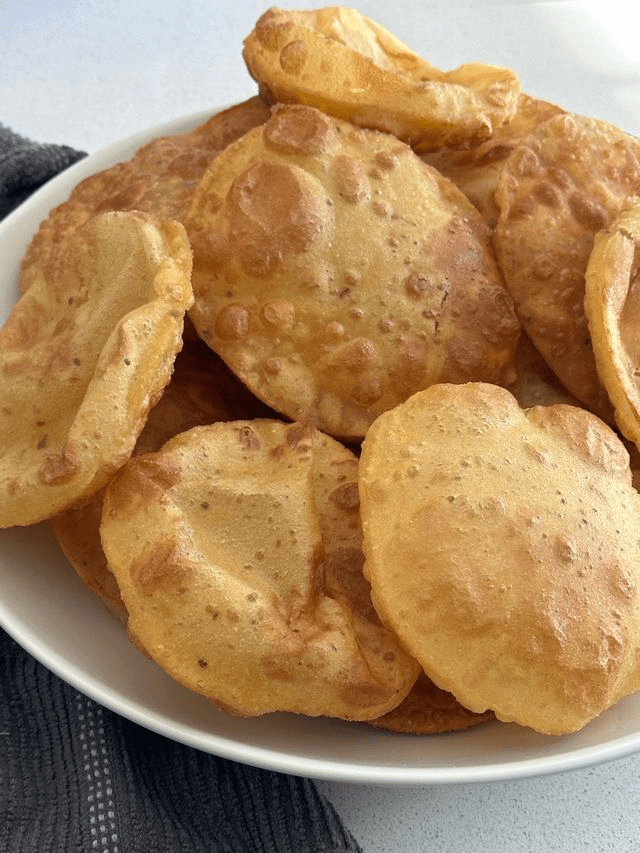
Poori, also spelled as puri, is a popular Indian fried bread made from unleavened whole-wheat flour. It’s made with just a few pantry ingredients: whole wheat roti flour, salt, red chilli powder, turmeric and carom seeds.
A mandatory part of a Sunday breakfast, Mum’s Thikki Puri were spicy, flaky, deep fried Gujarati flatbread that were usually enjoyed dunked in a cup of steamy masala chai, sometimes served with a potato curry, but always with spicy mango or gunda (gumberry, manjack) pickle or sweet and spicy mango chundo.
Leftover puris are pan roasted to warm them up the next day for breakfast.
Ingredients:
- 3 cups whole wheat flour
- 1 teaspoon red chilli powder
- 1 teaspoon green chilli paste
- 1 teaspoon ginger paste
- ½ teaspoon turmeric powder
- ½ teaspoon ajmo/carom seeds
- 4 tablespoon oil
- 1½ teaspoon salt
- 1 -1/4 or a bit more cup water
- ½ cup fresh fenugreek /methi leaves only finely chopped (optional)
- *extra oil for deep frying
Instructions:
- I bind my dough in my KitchenAid mixer- In the bowl mix whole-wheat flour, and all the dry and wet spices, add water room temp/tap water as needed to make firm but smooth dough (not soft like roti or naan dough but stiffer).
- Cover dough and set it aside for 15 minutes or longer.
- Divide the dough in equal parts and mine were 25gms each.
- Roll the dough into balls between your palms.
- On a clean work surface or using a wooden rolling board, roll the dough into about 3-inch diameter.
- If the dough sticks to the rolling pin or rolling surface, grease the surface and rolling pin with some oil.
- You can roll out all the puris out at once but make sure you cover them with a kitchen towel to prevent them from drying out, ideally, you should roll 4-5 and fry, and then repeat even better if you have someone to help you, one person can roll whilst the other fries them.
- Heat about 1- 2 inch of oil in wok or karai on medium high heat to 200°C/400°F.
- Place the puri in the karai and press it ever so gently with a skimmer, puri should puff right away.
- Turn puri over. Puri should be light creamy light beige -brown from both sides.
- Take the puri out and place it on paper towels to absorb the excess oil.
Foods that marry well with Puri:
- Koru Bateta nu Shaak (Dry Potato Curry),
- Bafela Bateta nu Shaak (Dry Boiled Potato Curry),
- Bateta nu rasavalu shaak (Potato curry with tomato gravy),
- Sambharo (cabbage stir fry),
- Any cauliflower and pea or potato curry,
- Bhinda ni Kadhi ( Okra in yoghurt gravy)
- Bharazi- Tuvar Lilva ni Kadhi (Pigeon Peas in yoghurt gravy)
- Rajma ( Kidney beans in tomato sauce)
- Dahi wara rajma ( Kidney beans with yoghurt sauce)
- Any pickle: mango, sweet chundo (sweet mango chutney), lime pickle, athela marcha, garmar (coleus root pickle), amba hardar pickle (fresh turmeric pickle), Gunda and Mango pickle,
- homemade or store bought fryums and of course masala chai.
Want to make plain Puri?
Simply leave out the green chilli paste, chilli powder, turmeric, ginger paste and carom seeds (or methi leaves) in this recipe for plain Poori.

 Nadia's Meza recipes
Leave a comment